

Educational Blog Business: The Evergreen Website Idea AI Can’t Kill
An Educational Blog Business might not sound as exciting as the latest AI side hustle, but education has something most online trends don’t: recurring demand.
Every year, new students search for revision notes, worksheets, practice questions, study guides, tutorials, and educational resources. Parents and teachers search for many of the same things.
Schools aren’t disappearing. Universities aren’t disappearing. Students aren’t going to stop needing help.
And AI didn’t kill this opportunity. In many ways, it made running an Educational Blog Business easier.
AI can help you research topics, organize resources, create original supporting content, discover keywords, produce social posts, and manage repetitive work faster.
Instead of chasing another temporary online trick, you can build something designed to become a real digital asset.
This is part of a bigger shift in blogging after AI, where useful resources and real utility are becoming more important than simply publishing more articles.
Why an Educational Blog Business Can Be Powerful
Think about the demand behind education.
Students constantly need study guides, revision notes, worksheets, exam resources, lesson summaries, practice questions, tutorials, and reference materials.
A student might search for “Grade 10 chemistry revision PDF,” while another searches for “free algebra practice worksheets” or “physics exam revision notes.”
Different students. Different subjects. Same underlying need.
Unlike a viral trend that may disappear next month, educational demand renews itself as new students enter school, exams return, semesters begin, and learners move to new grades.
That’s why an Educational Blog Business can become more than a collection of articles. You’re building a searchable library around problems people repeatedly need solved.
How Does an Educational Blog Business Make Money?
The business model is relatively simple:
Educational Resources → Search Demand → Website Traffic → Monetization
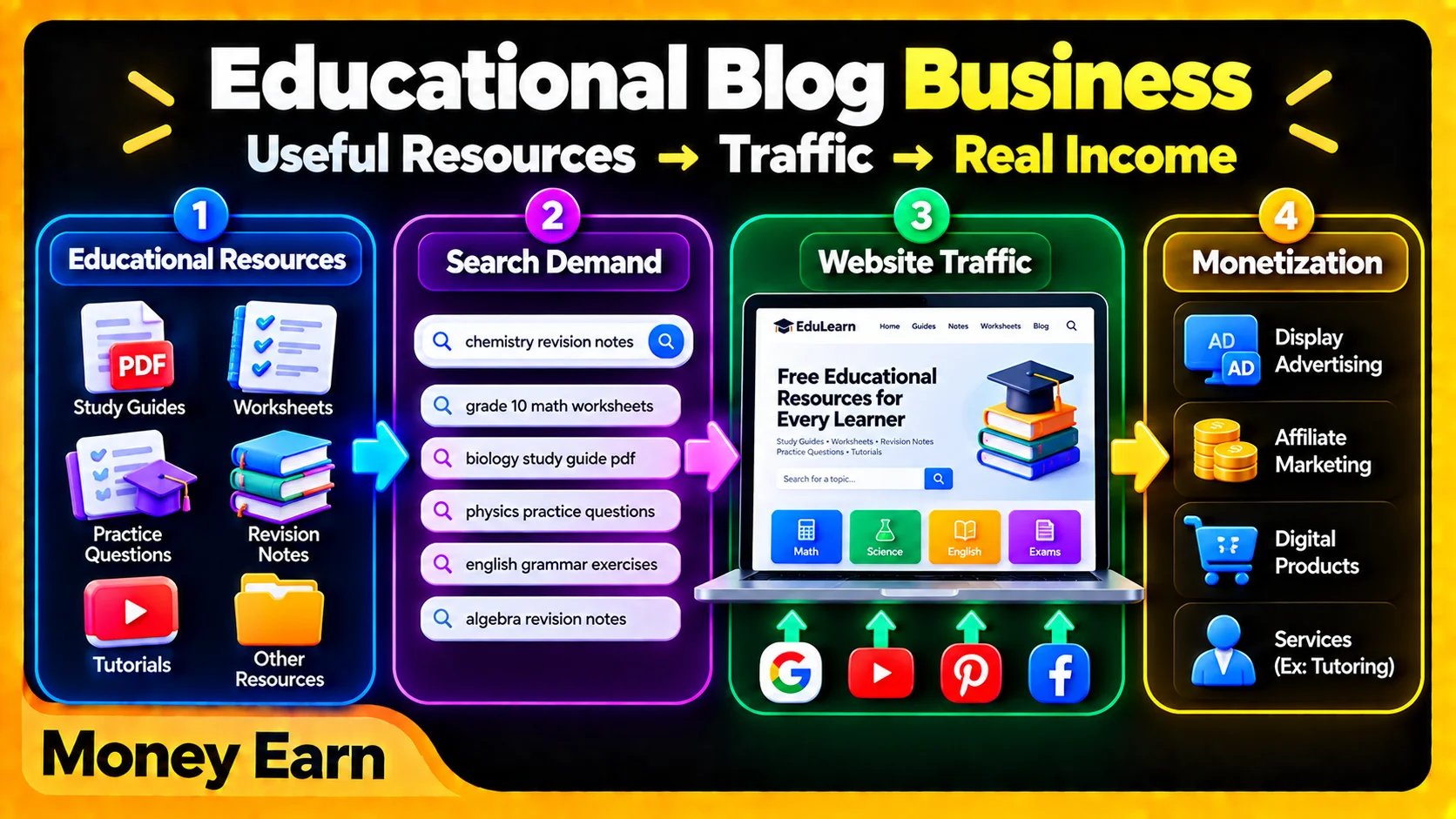
You create useful educational content and resources. Visitors discover your pages through Google, Facebook, Pinterest, educational communities, social media, or direct traffic.
Once the site attracts meaningful traffic, you can monetize that audience through display advertising, affiliate marketing, suitable advertising formats, digital products, or other relevant methods.
The website becomes the asset, useful content attracts the audience, and monetization sits behind the traffic.
1. Choose a Specific Educational Niche
A common beginner mistake is creating a website about everything: kindergarten, university, math, English, medicine, engineering, history, programming, and exam preparation.
Don’t start that way.
Choose a specific audience or educational market first. You could focus on high-school resources for a particular curriculum, English-learning materials, math worksheets, exam preparation, or selected university subjects.
Starting narrower makes it easier to understand who is visiting, what they’re searching for, and what you should publish next.
Once your Educational Blog Business gains traction, you can expand into related topics.
2. Build a Simple Educational Website
You don’t need an expensive technical setup to start.
Blogger can reduce initial costs, while WordPress gives you greater flexibility and room to expand. The right choice depends on what you’re planning to build.
Whichever platform you choose, prioritize mobile responsiveness, fast loading, clear categories, easy navigation, search functionality, and clean design.
Students aren’t visiting because your website has impressive animations.
They’re looking for something specific.
Help them find it quickly.
3. Publish Resources You Have the Right to Use
The internet is full of PDFs, books, worksheets, study notes, and educational files, but finding something online doesn’t automatically give you permission to republish it.
Build your Educational Blog Business around resources you have the right to distribute. These might include public-domain materials, openly licensed educational resources, materials explicitly allowing redistribution, your own original resources, or content provided by teachers and creators with permission.
This isn’t just about avoiding copyright problems. It gives you a stronger long-term asset because important parts of your website aren’t dependent on material you may later have to remove.
4. Use AI to Create Better Supporting Content
Suppose you legally obtain or create a useful chemistry revision resource.
A weak page might contain nothing except:
Title → Download Button
You can do much better.
Create an original page explaining what the resource covers, who it’s designed for, which topics are included, how students should use it, and what related resources might help.
Now the page isn’t just a file.
It’s genuinely useful content.
AI can help research and structure that information, create drafts, organize FAQs, and suggest related topics. You still need to review the result, check important facts, remove repetitive writing, and improve the final page.
That’s a much smarter use of AI in an Educational Blog Business than generating hundreds of generic articles.
5. Use SEO to Build Long-Term Traffic
Traffic is the fuel behind the business.
Instead of trying to rank for enormous keywords such as “Math,” target specific searches with clear intent.
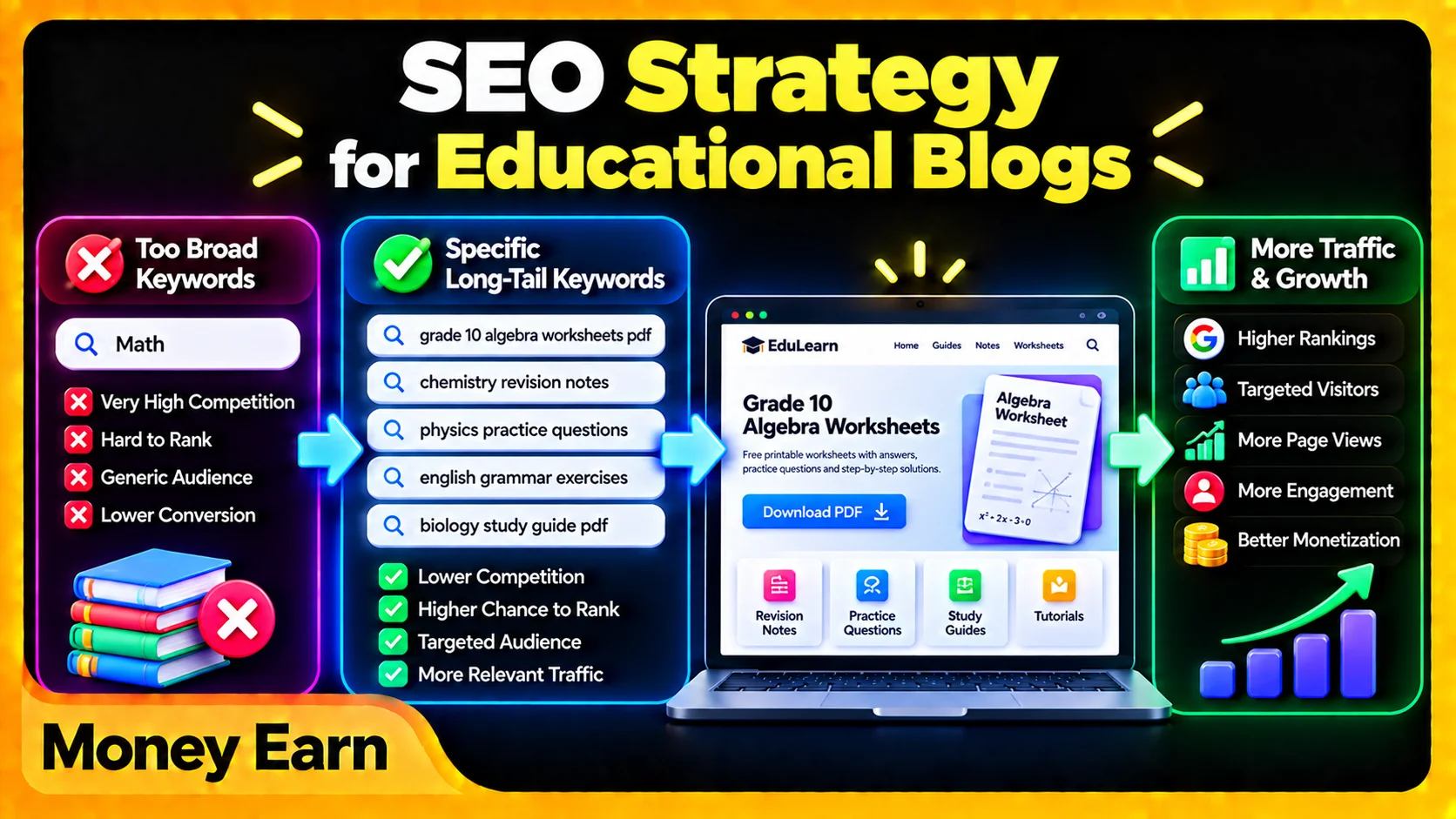
Examples could include:
“Grade 9 algebra worksheets PDF”
“GCSE chemistry revision notes”
“English grammar exercises for beginners PDF”
Someone making these searches already knows what they want.
Your job is to create a strong page that satisfies that search.
You should also build topic clusters rather than publishing random content. If your Educational Blog Business focuses on chemistry, create connected sections covering atomic structure, chemical bonding, acids and bases, organic chemistry, practice questions, revision notes, and exam preparation.
Connect related pages with internal links.
Over time, you’re building a structured educational library instead of a pile of unrelated posts.
6. Get Traffic Beyond Google
SEO can take time, so don’t make Google your only traffic source.

Facebook communities can be particularly useful in some educational niches because students, parents, and teachers already gather around specific subjects, school years, exams, and curricula.
Don’t enter communities and spam your links. Create genuinely useful posts and share relevant resources where the community rules allow it.
These communities can also become a source of research.
If dozens of students repeatedly ask for revision notes about the same chapter, that’s a signal. You may have discovered something people actively want.
Pinterest, YouTube, and other social platforms can also support your Educational Blog Business when they fit the audience and content.
7. Monetize Your Educational Blog Business
Once your website starts attracting meaningful traffic, you can begin testing suitable monetization methods.
Display advertising is one option. Publishers may use Google AdSense or other advertising networks depending on their eligibility, audience, content, geography, and the network’s requirements.
Affiliate marketing can work when you have relevant products or services to recommend. You could eventually sell your own original study packs, templates, premium resources, or other digital products too.
Direct Link Monetization may provide another layer for suitable sites when permitted by the advertising provider and implemented according to its rules.
Whatever method you use, don’t destroy the user experience just to squeeze more revenue from each visitor.
The student came for the resource.
Make sure they can actually find it.
A successful Educational Blog Business should aim for returning visitors, not just one monetized click.
The Real Power Is Recurring Demand
Education has one major advantage as a long-term niche: the audience constantly renews itself.
Every year brings new students, new exams, new semesters, new parents searching for resources, and learners moving into new grades.
You aren’t depending entirely on one viral trend.
That’s what makes an Educational Blog Business interesting as a long-term asset. You’re positioning your website around a human need that repeatedly comes back.
As the site grows, you can also expand beyond articles and downloads.
Interactive quizzes can help students test themselves. Calculators and study tools can increase usefulness. Original revision guides can strengthen the brand. A newsletter or community can bring visitors back, while YouTube can provide another traffic source.
Over time, the site can evolve from a simple blog into a broader educational platform.
AI Makes an Educational Blog Business Easier
AI can answer educational questions, but that doesn’t automatically remove demand for organized study materials, specific worksheets, revision resources, practice questions, or structured collections.
More importantly, AI can help you operate the website.
You can use it for research, outlines, explanations, resource summaries, FAQs, keyword ideas, categorization, metadata, social content, and content updates.
The better question isn’t:
“Will AI destroy my website?”
It’s:
“How can AI help me build and operate it more efficiently?”
For an Educational Blog Business, AI should be an assistant rather than the entire business.
Mistakes That Can Destroy the Idea
Avoid uploading copyrighted books or files you don’t have permission to redistribute. Don’t copy descriptions from competing websites, and don’t publish hundreds of empty pages just because AI makes them easy to produce.
Another mistake is thinking only about advertising. Build useful content and an audience first; monetization becomes much more valuable when real people actually visit and trust the website.
Finally, don’t expect instant results. SEO and content businesses usually require time, testing, publishing, and improvement.
You’re building an asset, not pressing a money button.
A Simple 30-Day Educational Blog Business Plan
During the first week, choose one educational niche, establish the website, and create clear categories.
In week two, research what your target students are searching for and publish your first useful resources with original supporting content.
During week three, begin distribution through suitable social platforms and communities. Pay attention to the questions students, teachers, and parents repeatedly ask.
In week four, analyze which pages receive traffic, which search queries appear, which resources attract attention, and which distribution channels work.
Then use that information to decide what to publish next.
The Educational Blog Business formula is straightforward:
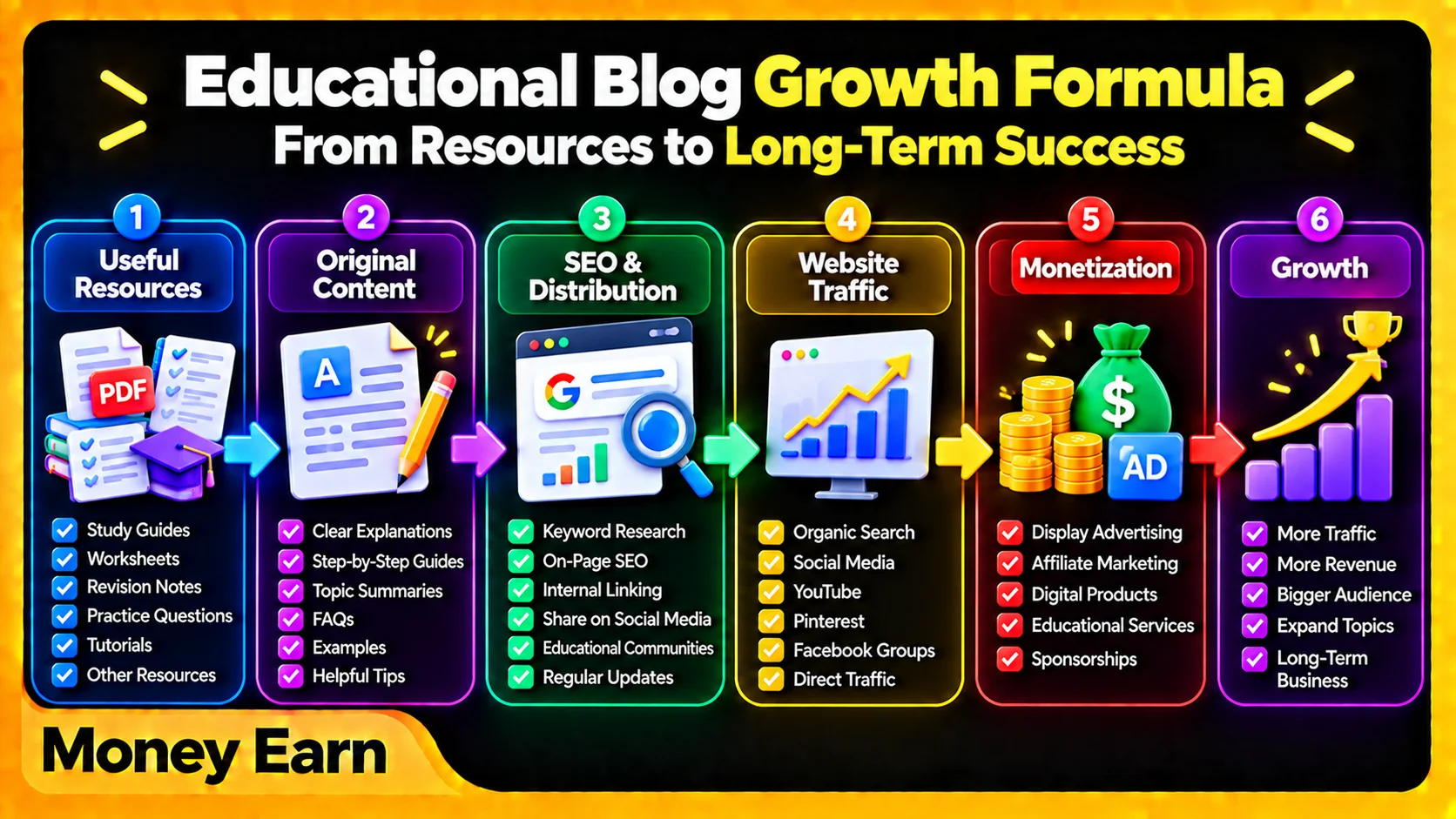
Useful Resources → Original Content → SEO & Distribution → Traffic → Monetization → Growth
At first, you’re pushing the machine yourself. You research, publish, promote, and improve. As the library grows, older pages can continue attracting visitors while you create new ones.
That’s when the project begins turning into a digital asset.
Final Thoughts: Build Something Useful
An Educational Blog Business is very different from chasing whatever online side hustle happens to be trending this month.
You’re building around an evergreen need: education.
Create useful resources, publish strong supporting content, attract students through search and social platforms, monetize that traffic intelligently, and keep improving the website.
Use AI to research faster, organize faster, create supporting content faster, and discover opportunities faster.
But build something valuable underneath it.
The real opportunity isn’t publishing another 500 generic AI articles. It’s using technology to help build an Educational Blog Business that students genuinely have a reason to visit.
Frequently Asked Questions
Is an Educational Blog Business Profitable?
An Educational Blog Business can be monetized through advertising, affiliate marketing, digital products, services, and other suitable methods. Results depend on traffic, audience, geography, expenses, content quality, and monetization strategy.
Can I Build an Educational Website With Blogger?
Yes. Blogger can be used without traditional paid hosting, while WordPress offers more flexibility and control for websites that may expand significantly.
Can AI Create Educational Content?
AI can assist with research, outlines, explanations, descriptions, FAQs, and organization. Human review is particularly important with educational information where accuracy matters.
How Can an Educational Blog Get Traffic?
SEO can provide long-term search traffic, while Facebook communities, Pinterest, YouTube, and other relevant social platforms can provide additional distribution.
Will AI Replace an Educational Blog Business?
AI changes how people find information, but an Educational Blog Business can provide organized resources, original materials, study tools, niche-specific content, and other value beyond a generic AI answer.