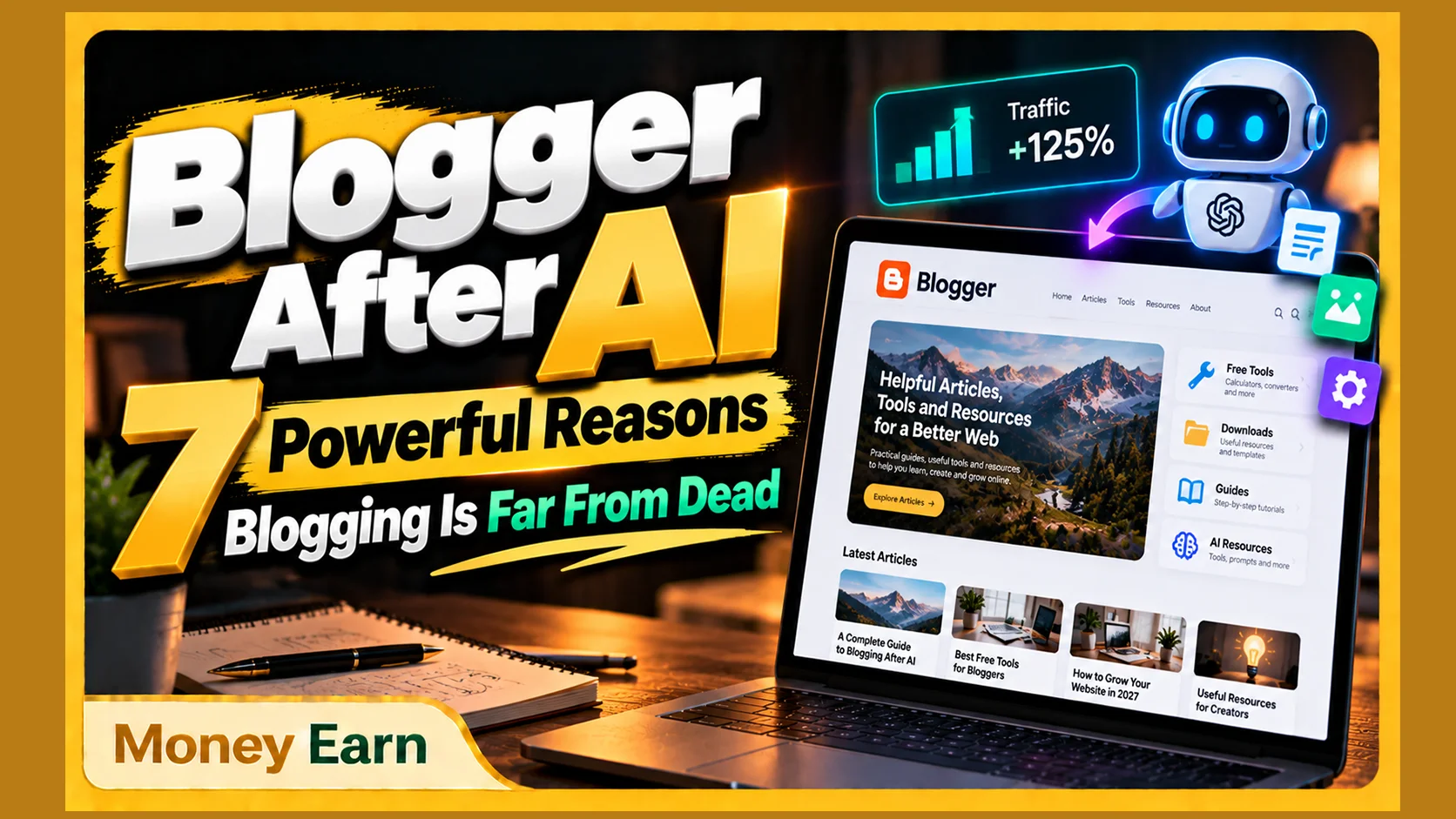
Blogger After AI: 7 Powerful Reasons Blogging Is Far From Dead
Blogger After AI sounds like a dead business model if you listen to what people are saying online.
“Blogging is finished.”
“ChatGPT killed websites.”
“Everyone can generate 1,000 articles now.”
But here’s what those claims miss: AI didn’t kill blogging. It killed the lazy version of blogging.
Publishing generic information, rewriting somebody else’s articles, and waiting for Google to send thousands of visitors is becoming much harder. At the same time, AI has created an opportunity for bloggers who build websites people actually need.
Think beyond articles. Build tools, calculators, resources, templates, useful downloads, databases, and interactive experiences, then use AI for content, research, marketing, and automation.
That’s the real opportunity with Blogger After AI.
Did AI Really Kill Blogging?
No. But AI absolutely changed the game.
Years ago, a blogger could create a website about fitness, cooking, technology, travel, or almost any other topic and publish informational articles answering common questions.
Producing hundreds of decent articles required serious time and effort.
Today, AI can generate them in seconds.
When something becomes incredibly easy to produce, simply producing more of it stops being a competitive advantage.
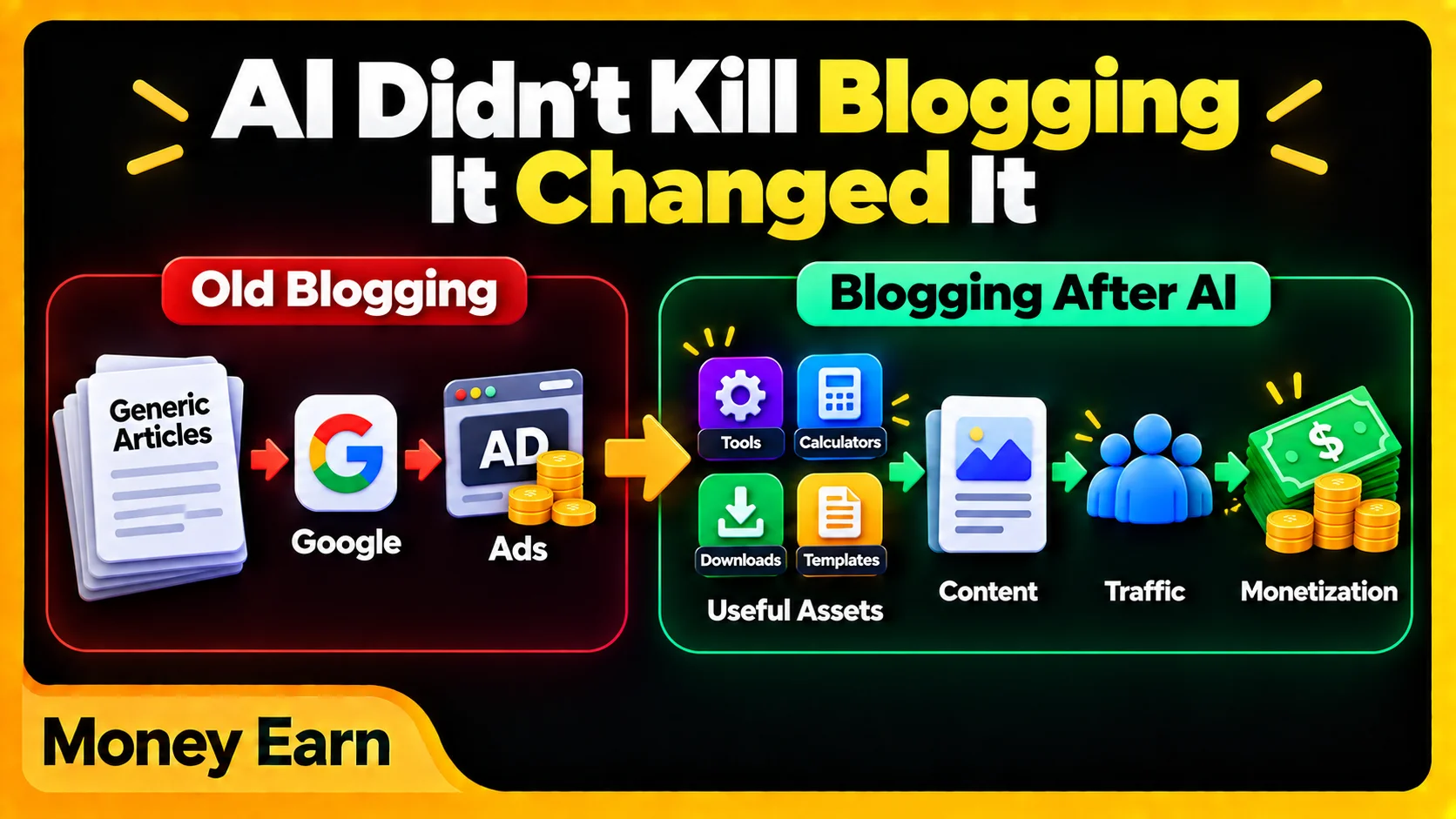
That’s the fundamental change behind Blogger After AI.
The question is no longer:
“Can I publish 100 articles?”
It’s:
“Why should somebody visit my website instead of getting the answer somewhere else?”
Answer that correctly and the entire business changes.
1. AI Didn’t Kill Blogging — It Exposed Generic Content
Imagine your website contains articles like:
“What Is Instagram?”
“What Is Artificial Intelligence?”
“What Is Freelancing?”
Thousands of websites already answer those questions, and AI can answer them instantly too.
But suppose your website gives visitors something they actually need to download, calculate, generate, convert, compare, or use.
Now you have something different.
The future of Blogger After AI isn’t necessarily about abandoning articles. It’s about giving those articles a stronger purpose.
Your content can support useful assets that visitors can’t replace with a one-sentence AI answer.
2. Build a Website AI Can’t Easily Replace
Stop thinking only about articles.
Think about utility.
Instead of creating another generic gaming blog, build useful game resources alongside your content. Instead of publishing endless financial articles, provide calculators with your guides. Instead of writing hundreds of articles explaining file formats, create tools that help visitors work with those formats.
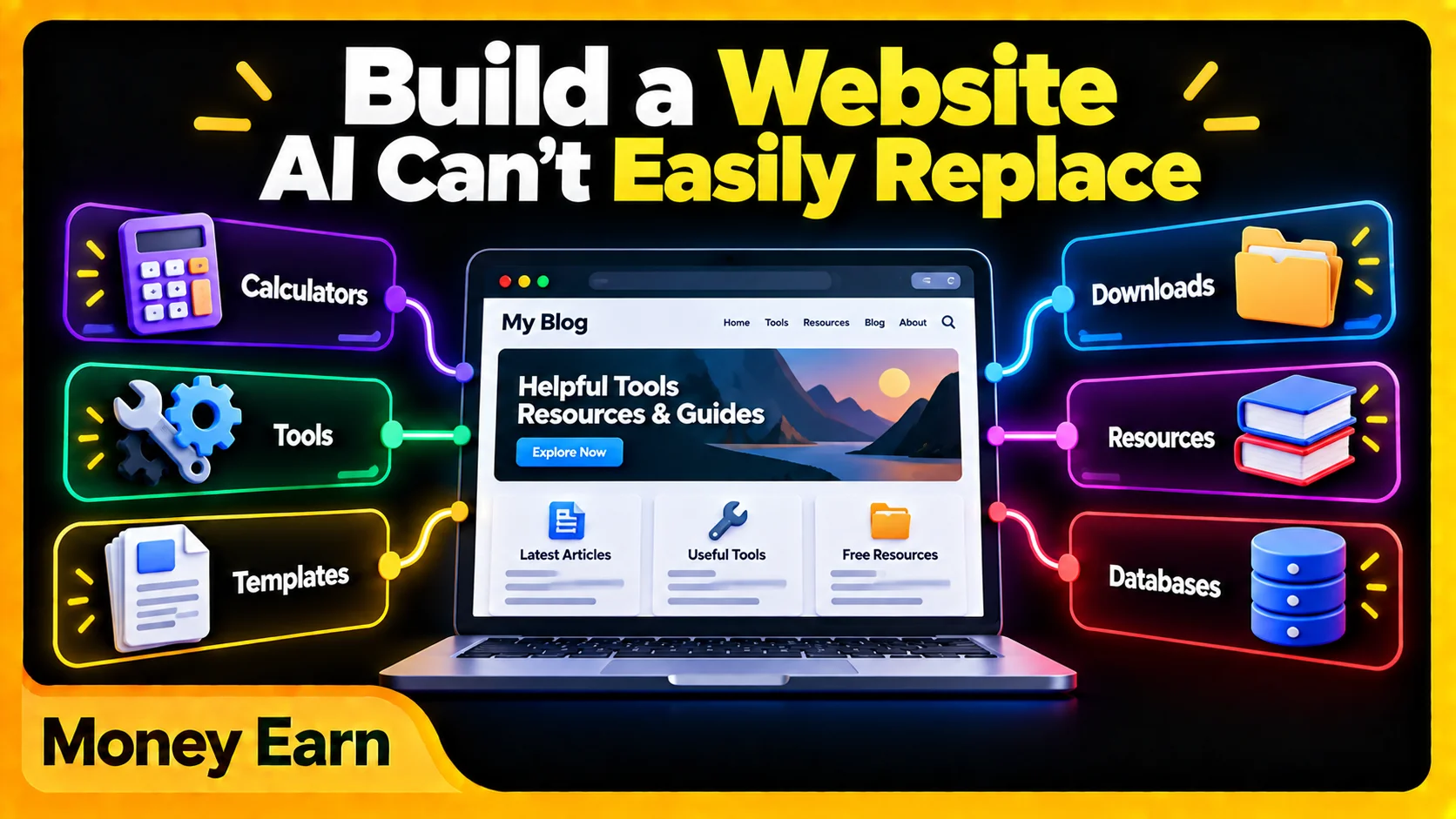
Your articles still matter because they can answer questions, attract search traffic, explain your resources, and help users.
But now visitors have another reason to come.
That’s a much stronger Blogger After AI strategy than publishing generic information at scale.
3. Build Downloads, Resources, or Online Tools
One approach is a download-focused website built around content you actually have permission to distribute, such as open-source software, public-domain books, original templates, educational resources, appropriately licensed assets, or creator-provided resources.
AI can then help you create supporting pages explaining what each resource does, who it’s for, how to use it, important features, alternatives, and common problems.
Another option is building a niche resource library.
A website for freelancers, for example, could combine proposal examples, templates, calculators, checklists, useful tools, contract resources, and practical guides.
Instead of somebody reading one article and disappearing, they may discover one resource and stay for several others.
You could also build simple online tools such as calculators, converters, text utilities, generators, productivity tools, or marketing utilities.
Imagine creating an Age Calculator and surrounding it with useful supporting content. The tool satisfies the immediate need while the content provides context and helps the page become discoverable.
That’s where Blogger After AI becomes much more interesting.
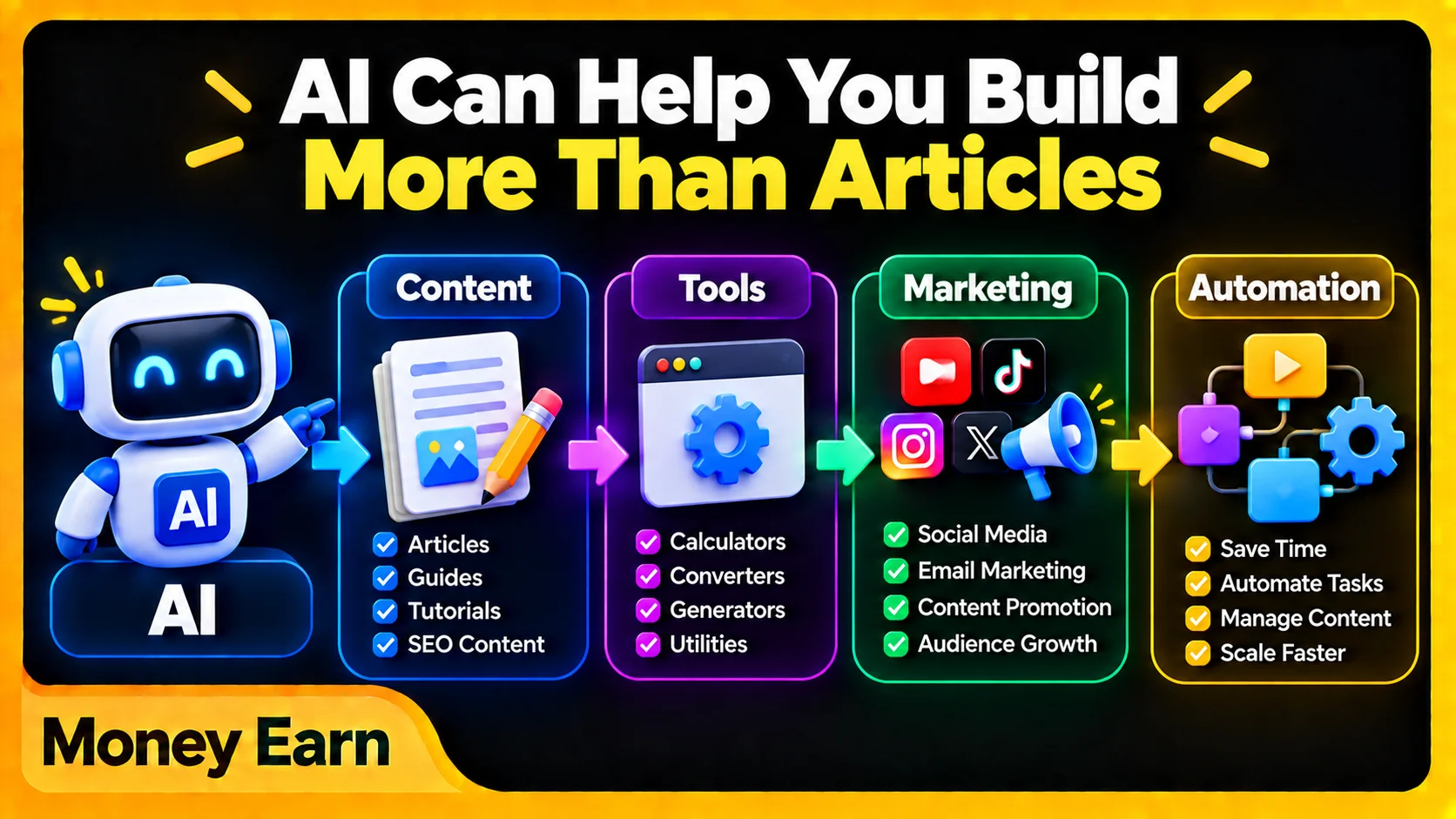
4. AI Can Help You Build More Than Articles
Here’s the irony.
People say AI killed blogging, but AI can help bloggers build things they couldn’t easily create before.
Modern AI coding assistants can help with basic HTML, CSS, and JavaScript utilities. You describe what you need, generate a starting point, test it, identify problems, improve it, and integrate the finished tool into your website where appropriate.
Instead of thinking:
AI → 1,000 Generic Articles
Think:
AI → Content + Tools + Marketing + Automation
AI can also help research topics, create outlines, improve drafts, generate social content, organize information, and automate repetitive work.
That’s a far more powerful use of AI for a Blogger After AI business.
You can also use AI to build a complete content creation workflow that turns ideas into content for multiple platforms.
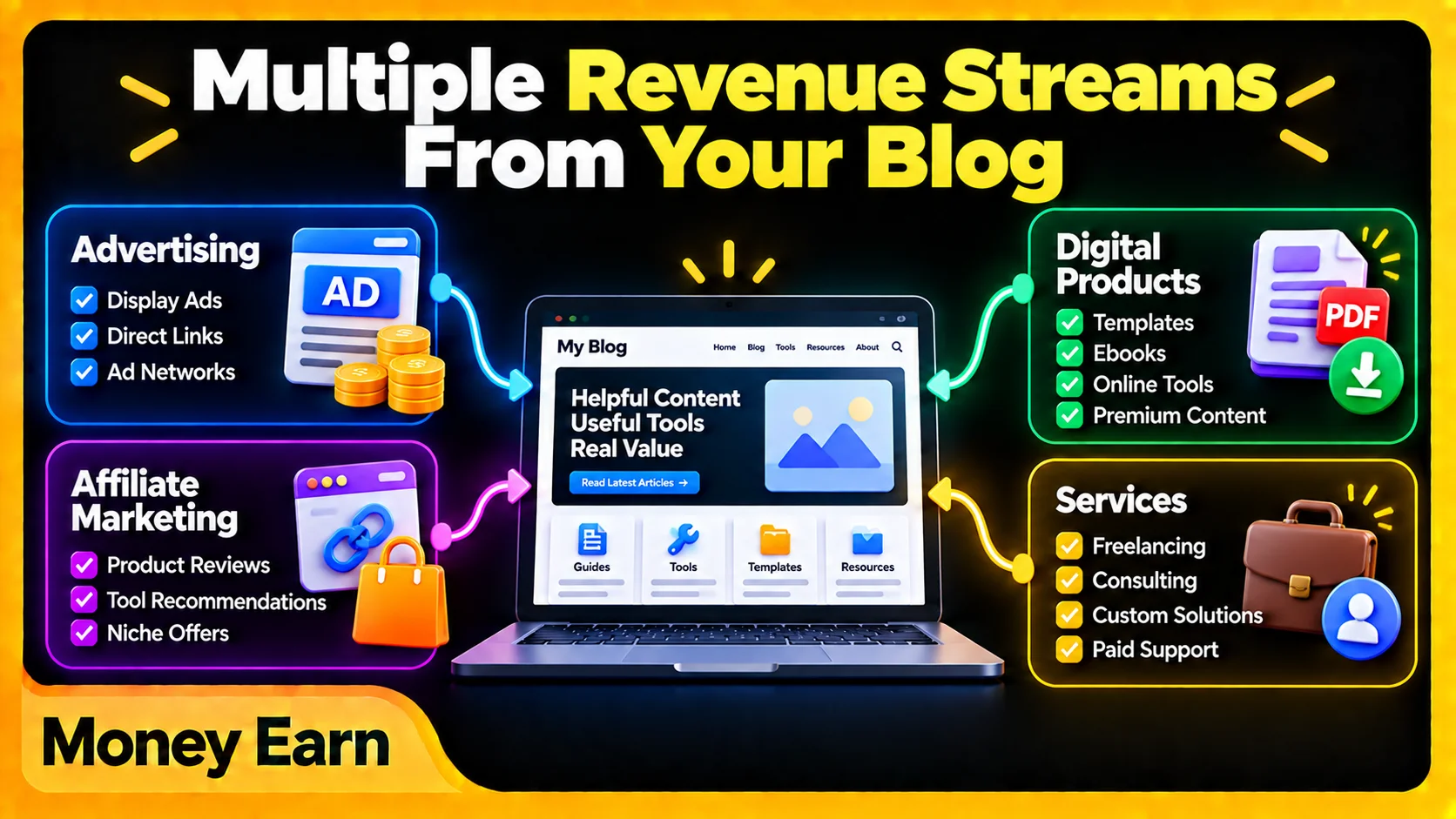
5. Blogger After AI Can Have Multiple Revenue Streams
Traffic is useful, but you’re building a business. Eventually, that traffic needs an appropriate monetization model.
Display advertising is one option. If your website qualifies for programs such as Google AdSense, advertising can become one revenue layer.
Alternative advertising networks may provide other options depending on your content, audience, traffic, and their requirements. Direct Link Monetization can also fit certain website models when used appropriately and according to the network’s policies.
Affiliate marketing adds another possibility. A software website could recommend relevant software, while a creator-resource site could recommend useful creator tools.
You can eventually sell your own products too, including templates, premium tools, guides, memberships, or other digital resources related to your niche.
This means Blogger After AI doesn’t need to depend on one source of revenue.
A useful website can potentially combine:
Traffic → Advertising + Affiliates + Products + Services
The exact combination depends on your website and audience.
6. Don’t Depend Only on Google for Traffic
Another outdated blogging mindset is publishing ten articles and then staring at Google Search Console every morning waiting for traffic.
SEO still matters, but Google doesn’t have to be your only distribution channel.
Suppose your website covers useful apps and software. You publish an article about an interesting tool, then transform the same topic into TikTok videos, Instagram Reels, YouTube Shorts, Facebook posts, Pinterest Pins, and Telegram content.
Now one article isn’t simply:
Article → Google
It’s feeding multiple traffic sources.
AI can help generate hooks, captions, short-video scripts, Pinterest descriptions, headlines, social posts, and email content. Automation can then help organize and distribute that content according to the rules of each platform.
Suddenly AI isn’t competing with your Blogger After AI strategy.
It’s helping market it.
7. Build a Traffic Ecosystem
The strongest approach is to make your website the central asset while using multiple platforms for discovery and distribution.
Google can provide search traffic. TikTok and YouTube Shorts can create short-form discovery. Facebook can support pages and communities. Pinterest can provide visual search-style discovery in suitable niches, while Telegram can help you build a returning audience.
Those channels can all feed the same central asset:
Your website.
If one traffic source slows down, your entire business doesn’t automatically disappear.
That’s much stronger than depending completely on one social account or search engine.
For Blogger After AI, distribution is becoming just as important as production.
AI Content Still Needs a Human Brain
“Use AI for blogging” does not mean:
Generate → Copy → Paste → Publish
AI should accelerate your thinking, not replace it.
Check important facts, remove repetitive or incorrect information, improve examples, add genuine experience where relevant, create original elements, add useful resources and internal links, and update outdated content.
The blogger who uses AI to generate hundreds of generic pages is using only a fraction of what the technology can do.
A stronger Blogger After AI workflow uses AI as an assistant across the entire business while human judgment controls the final result.
Stop Chasing Article Count
Imagine two websites.
Website A has 1,000 generic AI-generated articles.
Website B has 100 strong pages containing useful tools, downloadable resources, original information, good navigation, and content people genuinely need.
Which would you rather own?
Your goal shouldn’t be:
“How can I publish 50 articles today?”
It should be:
“How can I create 50 pages people genuinely want to visit?”
That’s the game now.
7 Powerful Rules for Blogger After AI
The first rule is to choose a niche with real demand rather than selecting something only because somebody claims it has a high CPM. Look for genuine problems, searches, and needs.
Second, give people a reason to visit through useful information, tools, resources, downloads, original data, or another form of value.
Third, use AI for speed across research, outlines, drafts, ideas, marketing, and automation, but don’t publish raw AI output without reviewing it.
Fourth, build multiple traffic sources rather than depending entirely on Google.
Fifth, monetize intelligently by choosing revenue models that naturally fit your content and audience.
Sixth, focus on quality over article count. One genuinely useful page can be a stronger asset than dozens of generic pages.
Finally, stay consistent. A website is an asset, and assets take time to build.
These rules are what make Blogger After AI different from the old strategy of publishing endless articles and waiting.
A Simple Blogger After AI Strategy for Beginners
Start by choosing a niche where people need more than generic information.
Build the website and add something useful: a resource, tool, calculator, legitimate download, template, or another asset people actively want.
Use AI to help research and create supporting content, then review and improve that content yourself.
Next, choose monetization methods appropriate to your audience and traffic. Turn each useful page into multiple pieces of social content and distribute them across relevant platforms.
Finally, study the data.
Which pages attract traffic? Which search queries appear? Which social platforms send visitors? Which resources get used? Which monetization methods generate results?
If calculators perform well, build more useful calculators. If Pinterest generates traffic, create more Pins. If software resources attract visitors, expand that section.
Follow the data instead of guessing.
That’s how a Blogger After AI project gradually becomes a business.
Is Passive Income From Blogger Still Possible?
A website isn’t passive when you’re building it.
You’re researching, creating pages, building resources, promoting content, testing monetization, and improving the site.
But an interesting thing can happen as the asset grows.
A page created months ago can continue receiving visitors. A tool can be used repeatedly. An older social post can keep generating clicks, and search rankings can continue bringing traffic while you’re working on something new.
The goal isn’t:
“Do nothing and become rich.”
It’s:
“Do the work once and potentially benefit from it repeatedly.”
That’s the more realistic appeal of Blogger After AI.
The New Blogging Formula
Old blogging often looked like:
Write Article → Wait for Google → Add Ads
The modern model can look more like:
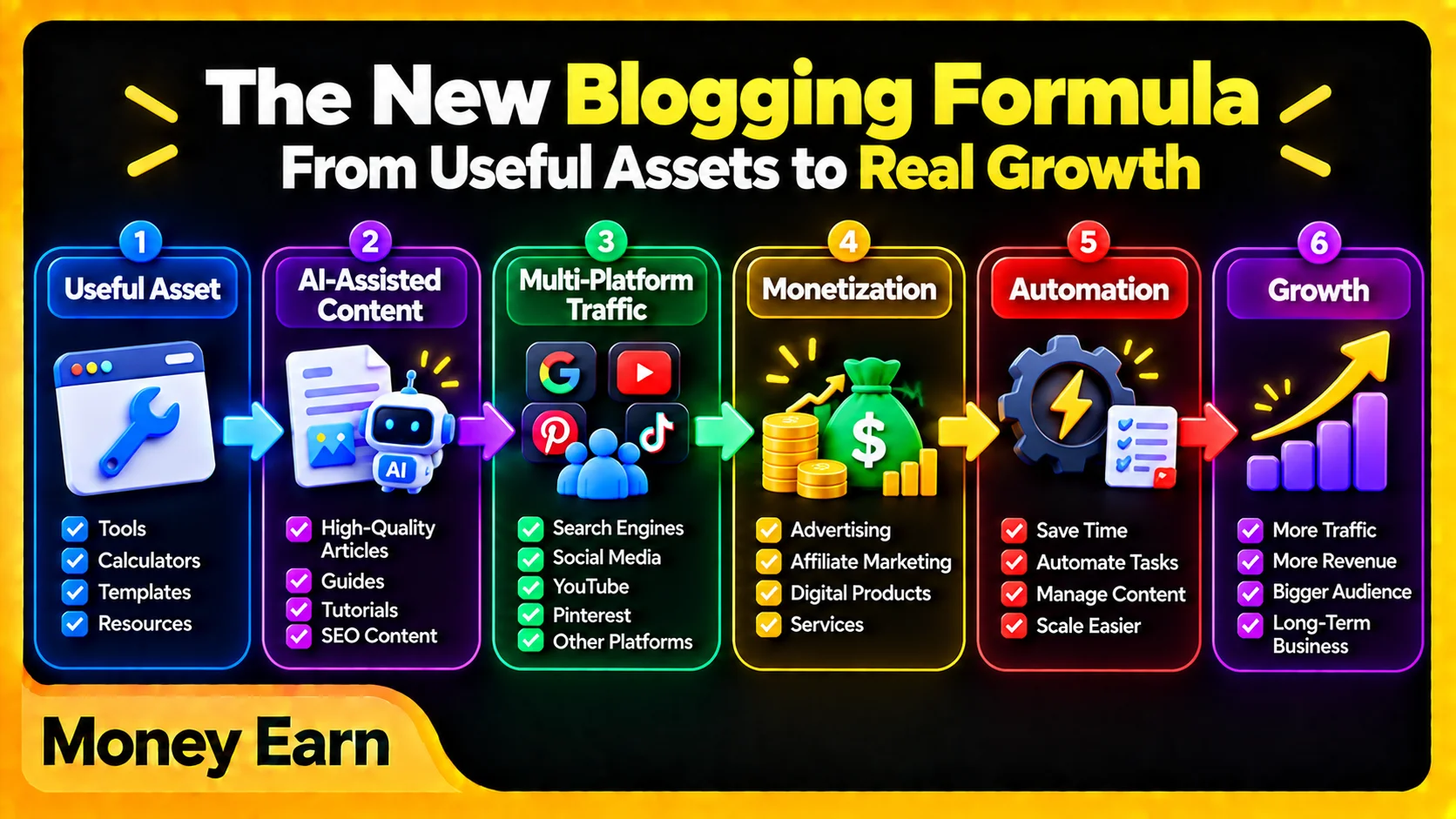
Useful Asset → AI-Assisted Content → Multi-Platform Traffic → Monetization → Automation → Growth
That’s why AI doesn’t necessarily destroy blogging.
It expands what a blogger can do.
You can use AI to assist with writing, research, design, development, marketing, analytics, and content repurposing while building one central digital asset.
Final Thoughts: Blogger After AI Isn’t Dead
People have made money from websites for years. Then generative AI exploded, and suddenly everyone started announcing that blogging was dead.
The game changed, but websites didn’t disappear.
If your entire strategy is publishing generic information that AI can answer instantly, you’re entering a much harder battle.
But if you build a tool, resource library, legitimate download platform, calculator, specialized database, or niche website people actually need, the situation changes.
Then use AI to help create content, distribute it, analyze results, and automate repetitive work.
Now AI isn’t killing your business.
It’s helping you build it.
Stop asking whether Blogger After AI is dead.
Ask:
“What can I build that people still have a reason to visit?”
Find that answer, build around it, create multiple traffic sources, monetize intelligently, and give the project enough time to become an asset.
Blogging didn’t disappear after AI.
The rules changed.
Frequently Asked Questions
Is Blogger After AI Still Worth It?
Yes. Blogger After AI can still provide opportunities when the website offers genuine value beyond generic information, such as tools, resources, downloads, original content, or useful experiences.
Can You Make Money With Blogger After AI?
A Blogger After AI website can potentially generate revenue through advertising, affiliate marketing, digital products, services, Direct Links, and other appropriate monetization methods.
What Are Good Blogger Niches After AI?
Niches that provide utility can be particularly interesting, including online tools, calculators, legitimate downloads, specialized resources, templates, and niche databases.
Can AI Write My Blogger Articles?
AI can assist with research, outlines, drafts, titles, FAQs, and editing. Human review remains important for accuracy, originality, usefulness, and quality.
Can AI Help Get Traffic to My Blog?
Yes. AI can help create short-video scripts, social posts, headlines, Pinterest content, captions, and other promotional assets that support a multi-platform Blogger After AI traffic strategy.