
7 Profitable Ways to Find Web Development Clients Using TechLens AI
Finding clients is one of the biggest challenges for freelance web developers. You may know how to build websites, create landing pages, improve existing projects, or develop web applications, but those skills do not automatically bring paying customers.
One practical approach is to research businesses before contacting them. Instead of sending generic messages to hundreds of companies, you can investigate their public websites, understand their apparent technology choices, and identify reasons they might need development services.
TechLens AI can help with this research by detecting publicly observable website technologies, including content management systems, JavaScript frameworks, analytics tools, and other technology indicators. Its advertised WordPress analysis and data export features can also help organize information about potential clients.
The goal is not to assume that a business needs a new website simply because of the technology it uses. Instead, use the available evidence to identify relevant questions, qualify prospects, and offer services that fit their actual needs.
In this guide, you will learn seven practical ways to use TechLens AI to find web development clients, build a more focused prospect list, and turn research into potential freelance projects.
Table of Contents
- What TechLens AI Can Tell You About Business Websites
- Why Technology Research Helps With Client Acquisition
- Seven Ways to Find Potential Clients
- How to Qualify and Organize Prospects
- How to Approach Businesses Professionally
- Turning Prospects Into Paid Projects
- Common Mistakes to Avoid
- A Seven-Day Client Research Plan
- Frequently Asked Questions
What TechLens AI Can Tell You About Business Websites
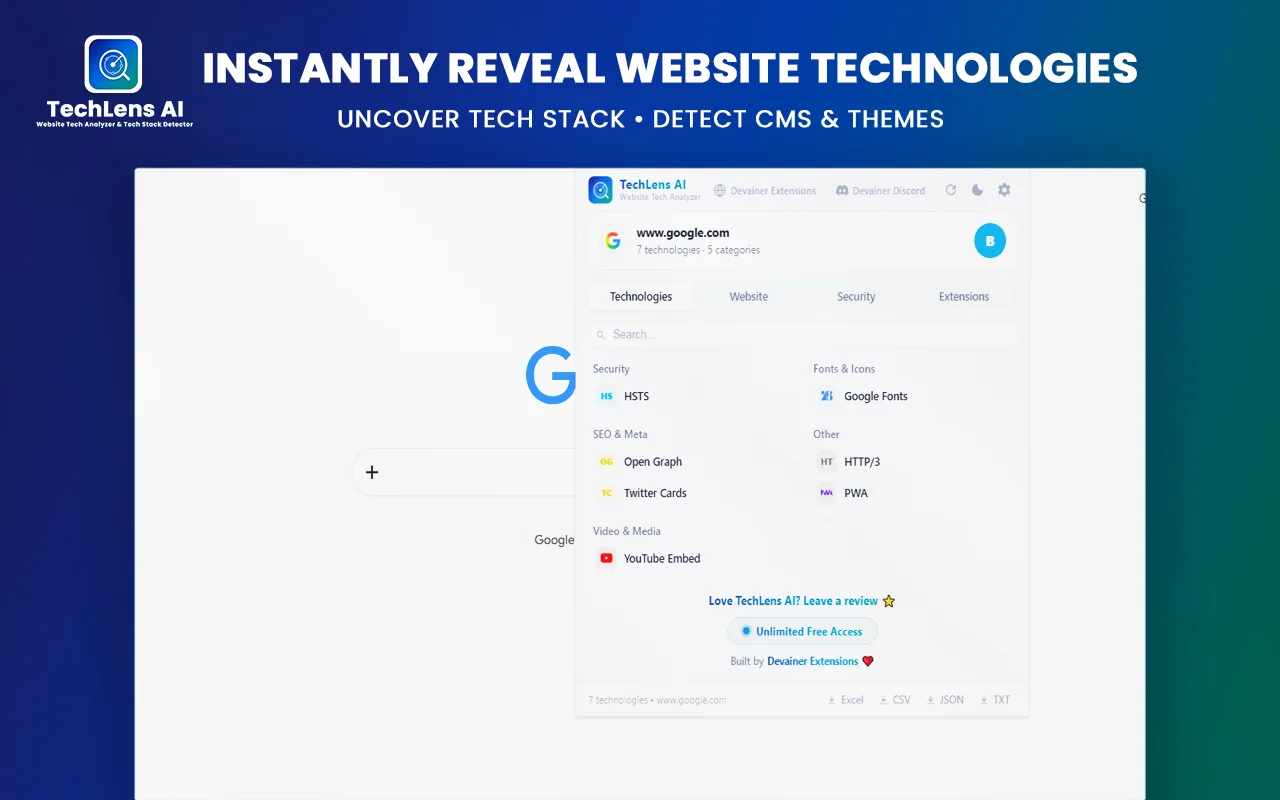
TechLens AI is a browser extension designed to detect technologies used by websites and provide an overview of selected technical details.
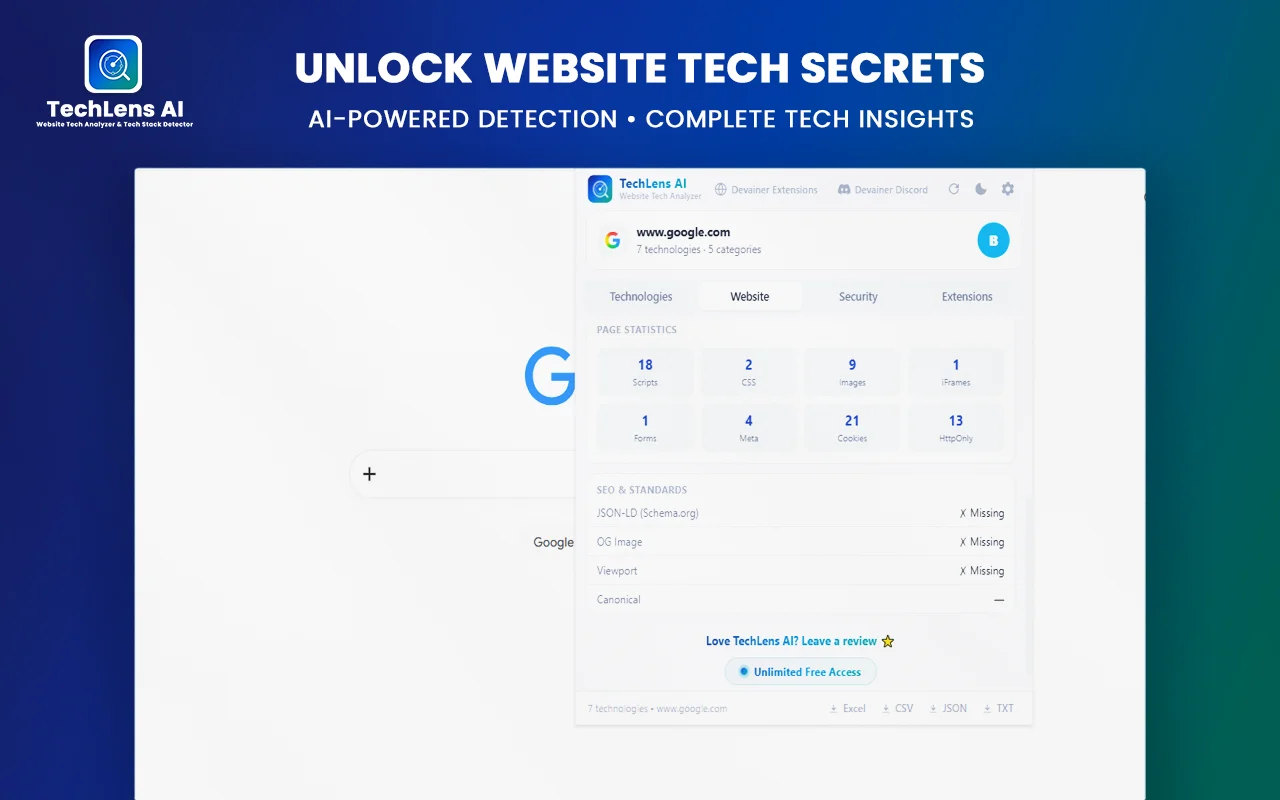
Its advertised capabilities include detection across 22 technology categories, such as content management systems, JavaScript frameworks, UI libraries, analytics tools, content delivery networks, and hosting-related technologies. It also advertises WordPress theme and plugin analysis, selected security-related checks, and exports to CSV, Excel, JSON, and TXT.
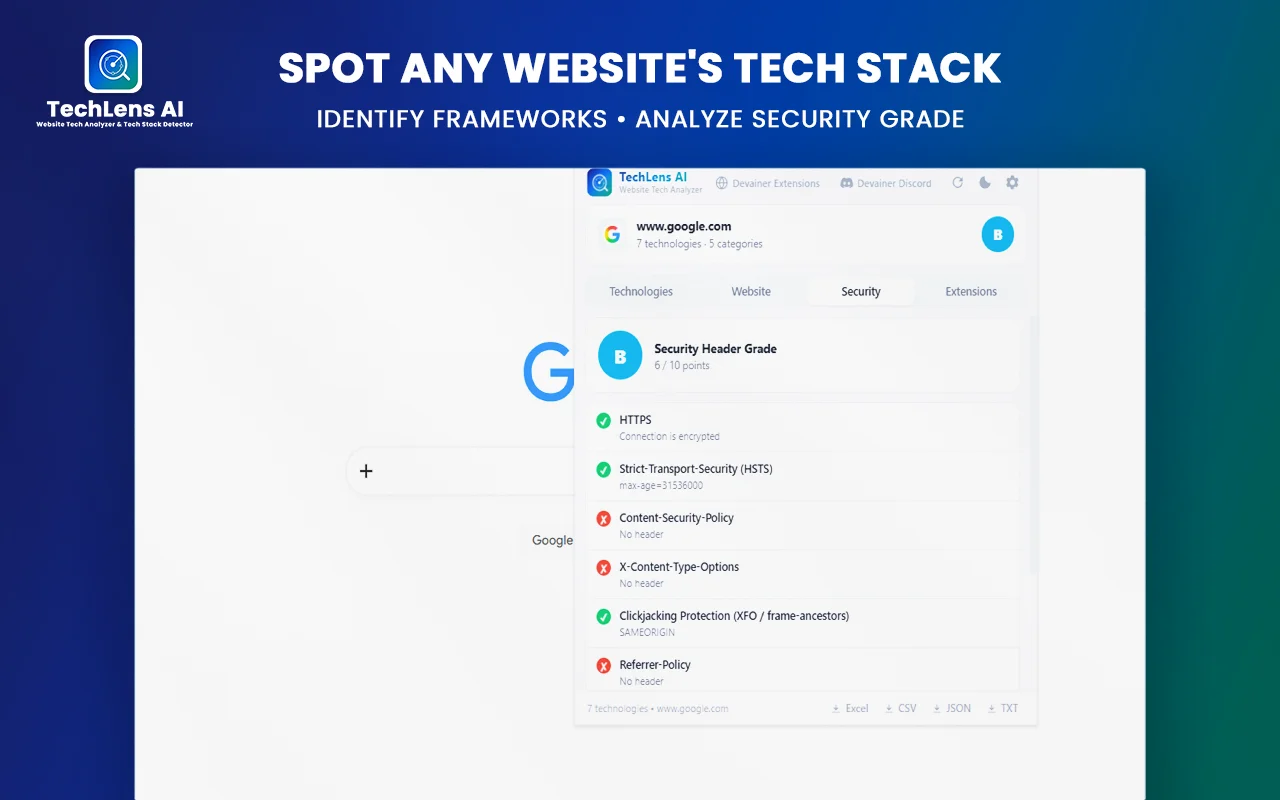
For client research, these features can help you understand the apparent technology stack of a business website before deciding whether the company is a suitable prospect.
For example, identifying a detectable CMS can help you prepare questions about maintenance or customization. Detecting a JavaScript framework may provide context when discussing a possible front-end project. WordPress theme and plugin indicators may help you decide whether a business is worth researching further for a WordPress-related service.
However, a technology detector cannot reliably tell you whether a company has a development budget, is dissatisfied with its website, or plans to hire a freelancer. It also cannot reveal every component or private business requirement.
Treat TechLens AI as a research aid—not a tool that automatically identifies customers who are ready to buy.
Why Technology Research Helps You Find Web Development Clients
Many freelancers use the same approach to finding clients: search for businesses, copy their contact details, and send a message offering website development.
This approach can be ineffective because the message often has little connection to the recipient’s needs.
Research gives you a way to make your outreach more relevant. By reviewing a company’s public website and apparent technology stack, you can prepare better questions and decide whether your services are a reasonable fit.
Technology research can help you:
- Identify businesses using technologies you already work with.
- Find companies whose websites may require customization or migration.
- Discover WordPress sites that could be relevant to your maintenance services.
- Research agencies that may need subcontracted development support.
- Compare public technology indicators across potential customers.
- Organize prospect information for targeted outreach.
- Avoid spending time contacting businesses that do not fit your services.
The important distinction is between an observation and a business problem. A website using an older-looking theme, for example, does not automatically need a redesign. You need additional evidence, such as the company’s stated goals, its public service offering, or a requirement it has shared.
1. Find Businesses That May Need Website Redesigns
A redesign project can be a valuable opportunity for a freelance developer, but finding suitable prospects requires more than looking at a website’s technology stack.
TechLens AI can help you identify the apparent CMS, frameworks, and other publicly detectable technologies. You can use those observations as context while researching businesses whose websites might benefit from a redesign.
How to Use This Strategy
Start with a specific business niche, such as local service companies, independent retailers, professional consultants, or small B2B firms.
Find businesses in that niche and review their public websites. Use TechLens AI to record relevant technology indicators, then evaluate the website itself for evidence of possible improvement opportunities.
For example, you might notice that a business has a website but does not clearly explain its services, make contact information easy to find, or provide a straightforward path for requesting a quote.
Those observations are more relevant to a redesign conversation than the CMS alone.
What to Record
Create a prospect record containing:
- Business name and website URL.
- Industry and location, if relevant to your target market.
- Detected CMS or frameworks, where available.
- A specific, observable website improvement opportunity.
- Development services that may address the opportunity.
- The date you reviewed the website.
How to Turn Research Into an Offer
Rather than telling a business that its website is outdated based on a quick scan, offer a specific improvement.
For example, if the website makes it difficult for visitors to request a quote, you could propose a clearer service page and a more accessible inquiry form.
Your research should help you start a relevant conversation, not make unsupported claims about the company’s website quality or business performance.
2. Identify WordPress Customization and Maintenance Opportunities
WordPress websites can require many types of development work, including theme customization, new page templates, performance improvements, migrations, and ongoing maintenance.
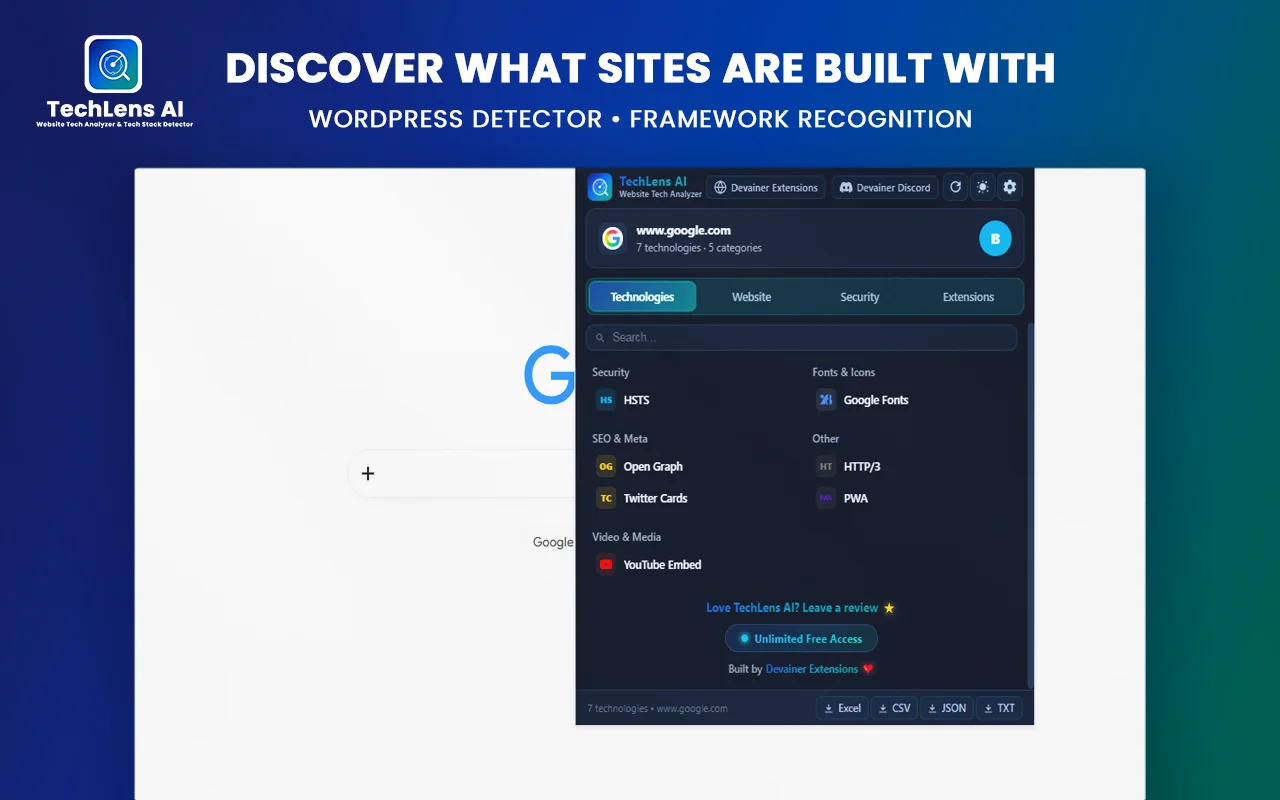
TechLens AI advertises WordPress theme and plugin detection, which may help you identify businesses whose publicly detectable setup is relevant to your existing skills.
How to Research WordPress Prospects
First, identify businesses with detectable WordPress websites. Then visit their public pages and research their services, content, and customer journey.
Look for a genuine reason your services might be useful. Perhaps the company is launching a new service, expanding into another market, or publishing content that would benefit from a better-organized website structure.
The detected theme or plugins may provide technical context, but they do not establish that the website is broken or poorly maintained.
Services You Could Offer
Depending on your skills and the client’s requirements, potential offers include:
- Custom WordPress page development.
- Theme customization.
- Landing page creation.
- Website migration planning and implementation.
- Authorized maintenance and troubleshooting.
- New functionality for existing websites.
If you need to reference official WordPress documentation during your research, use WordPress.org.
A Practical Example
Suppose you find a professional services company with a WordPress website and several distinct service offerings. Its public website makes those services difficult to navigate.
You could propose restructuring the service pages and creating clearer inquiry paths. The detected WordPress setup helps you prepare for a technical discussion, while the visible navigation problem gives you a concrete reason to contact the business.
3. Find Agencies That May Need Development Subcontractors
Not every potential client needs to be the owner of a business website. Digital agencies can also be customers.
A design or marketing agency may need a reliable developer to implement landing pages, customize WordPress websites, build client portals, or handle overflow work during busy periods.
TechLens AI can help you research the technologies used on agency websites and selected public examples of their work. However, technology detection alone cannot prove that an agency is hiring or outsourcing.
How to Build an Agency Prospect List
Start by identifying web design, branding, marketing, and digital product agencies that serve clients whose projects match your skills.
Review their public websites and portfolios. Record relevant technology indicators where TechLens AI detects them, and note the services the agency advertises.
Prioritize agencies whose offerings complement your own. For instance, a branding agency may need development partners to turn its design work into functional websites.
What to Offer Agencies
Your pitch could focus on a defined capability, such as:
- Converting approved designs into responsive websites.
- Developing WordPress websites and custom components.
- Building landing pages for marketing campaigns.
- Providing additional development capacity for existing projects.
- Handling clearly scoped website updates.
Why This Approach Can Work
A successful agency relationship may lead to multiple projects over time. Instead of repeatedly finding individual business owners, you can build relationships with agencies that occasionally need your services.
Keep the offer specific. Explain what you can deliver, how you work with existing design files, and how you handle revisions and handovers.
Do not imply that your technology research reveals an agency’s private client pipeline or internal business needs.
4. Discover Businesses That May Need Website Migrations
Businesses sometimes migrate from one CMS or website platform to another because of changing requirements, maintenance constraints, new functionality, or a planned redesign.
Technology research can help you understand the apparent starting point when evaluating a possible migration project.
How to Find Migration Prospects
Research businesses that have publicly announced a redesign, platform change, expansion, or new digital initiative. Review their websites and use TechLens AI to gather detectable information about their current technology stack.
The strongest prospects are those with an identifiable reason to consider a change—not simply those using a particular CMS.
For example, a business may publicly describe plans to expand its online services. That could justify a conversation about whether its current website architecture supports its requirements.
What You Can Offer
Depending on your experience, you might offer:
- A migration discovery consultation.
- A preliminary technology inventory.
- Content and URL migration planning.
- A new website implementation.
- Testing and launch support.
- Post-launch maintenance.
A migration requires careful planning beyond detecting the current technology stack. You may need authorized access to the CMS, hosting environment, databases, analytics, and other systems before providing a reliable estimate.
How to Avoid Bad Leads
Do not assume a company needs a migration because its website uses an unfamiliar or older technology. Its existing setup may be stable and appropriate for its requirements.
Use public evidence to decide whether a conversation is worthwhile, then ask about the company’s goals before recommending a platform change.
5. Research Businesses for Landing Page Development Projects
Landing pages can be a more focused project than a complete website redesign. Businesses may need dedicated pages for new services, advertising campaigns, lead generation, or product launches.
Technology research can help you prepare for these opportunities, especially when combined with a review of the company’s public marketing activities.
What to Look For
Research businesses that publicly promote specific services, campaigns, or products. Review whether their websites provide a clear destination for someone interested in that offer.
You might identify opportunities such as:
- A service promoted on social media without a clear dedicated landing page.
- A product page with unclear next steps.
- A business that needs a new page for a recently announced service.
- A campaign that would benefit from a more focused inquiry process.
These are research observations, not proof that the business is losing customers. Avoid estimating lost sales or conversion rates without reliable evidence.
How TechLens AI Fits In
Use the extension to understand the detectable technologies behind the existing website. This can help you prepare technical questions and consider how a landing page might fit the current platform.
Then develop a proposal based on the business’s public offer and the improvement you observed.
Example Service Package
A clearly scoped landing page package might include one responsive page, a contact or inquiry form, basic on-page structure, and a handover document.
Specify what is included, what requires separate pricing, and whether copywriting, analytics configuration, or ongoing optimization is part of the offer.
6. Use Exported Technology Data to Organize Prospect Research
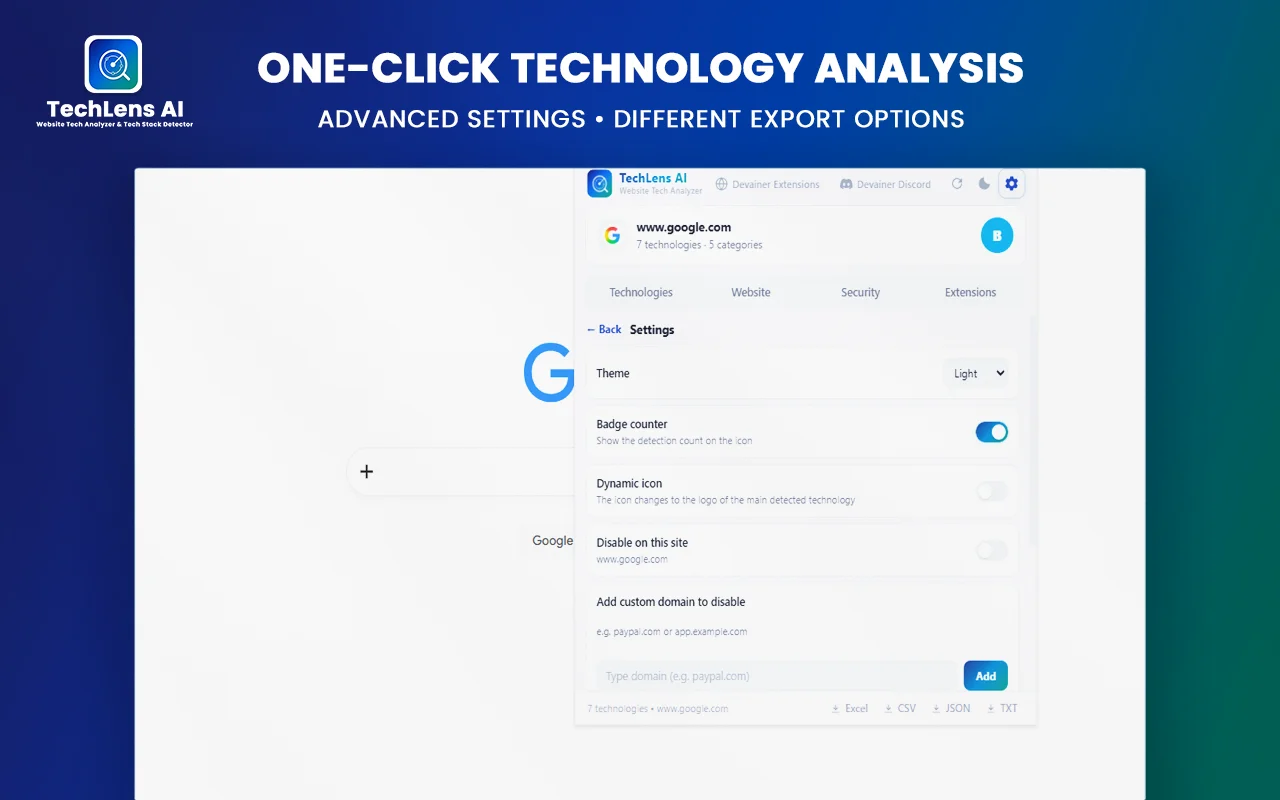
When you research many websites, keeping everything in separate browser tabs and notes becomes difficult.
TechLens AI advertises data export in CSV, Excel, JSON, and TXT formats. These exports can help you organize selected technology observations into a prospect research workflow.
The goal is not to collect the largest possible list. It is to maintain a manageable list of businesses that fit your services and have a credible reason for further discussion.
How to Build a Useful Prospect Spreadsheet
Consider using columns such as:
| Field | Purpose |
|---|---|
| Business name | Identify the prospect |
| Website URL | Link to the public website |
| Industry | Group similar businesses |
| Detected technologies | Record relevant observable indicators |
| Potential service | Match the prospect to your capabilities |
| Evidence or opportunity | Note a specific, verifiable observation |
| Contact source | Record a legitimate public business contact source |
| Research date | Track when the website was reviewed |
| Outreach status | Record whether you contacted the prospect |
| Follow-up date | Organize appropriate follow-up |
Keep technology findings separate from your assumptions about the prospect. A detected framework is an observation; an assumption that the business needs a developer is not.
How to Prioritize Prospects
Give priority to prospects that meet three criteria:
- Their business and website fit your services.
- You can identify a specific, relevant opportunity or stated need.
- You can explain a credible way your service could help.
A smaller, carefully researched list can be more useful than a large collection of websites with no clear connection to your offer.
Only collect information you need for legitimate business outreach, and respect applicable privacy rules and marketing requirements.
7. Build a Repeatable Lead Research Service for Other Freelancers
If you become efficient at researching websites and organizing technology information, you could offer that workflow to other developers or agencies.
This is different from selling a website audit to the website owner. In this model, your customer pays for organized research that helps them identify and evaluate potential business prospects.
What the Service Could Include
A research package might provide:
- A defined number of businesses in a selected industry.
- Public website URLs.
- Detected technology indicators where available.
- A brief description of each business’s relevant public offering.
- A potential development service that fits the observable context.
- Source notes and research dates.
- A spreadsheet that the customer can review and filter.
For example, a freelance WordPress developer might commission a list of businesses in a specific industry whose websites appear to use WordPress. Your research could organize the candidates and include relevant observations from their public websites.
The list should not claim that the businesses need development work or are ready to buy. The client must qualify those prospects and establish their actual needs.
How to Price the Service
Price according to the research scope, number of prospects, level of verification, and detail of the final spreadsheet.
A basic list of public website URLs requires less work than a researched prospect list with technology observations, relevant project opportunities, and checked business contact sources.
Define your deliverables and verification process before accepting a project. Never fabricate contact details or present an unverified business need as a confirmed sales opportunity.
How to Qualify and Organize Prospects
Finding web development clients is not just about discovering websites. It is also about deciding which opportunities deserve your time.
After researching a business, evaluate the prospect against a few practical questions.
Does the Business Fit Your Skills?
If you primarily develop WordPress websites, prioritize projects where WordPress development is relevant. If you build custom web applications, look for businesses whose stated requirements match that expertise.
Do not pursue every technology you detect. Focus on work you can deliver competently.
Is There a Specific Reason to Make Contact?
A useful reason might be a public announcement about a new service, a clearly observable navigation issue, or an agency advertising complementary services.
Avoid claims about poor security, low conversion rates, or outdated infrastructure unless you have sufficient evidence to support them.
Can You Explain the Value of Your Offer?
Your message should describe a relevant service and why it may be worth discussing. It should not depend on the prospect understanding technical terms or trusting an automated scan.
Is the Prospect Worth Following Up With?
Record the date of contact and any response. Follow up respectfully when appropriate, and stop if the recipient declines or asks not to be contacted.
A structured process helps you spend more time on qualified prospects and less time on random outreach.
How to Approach Businesses Professionally
Once you identify a relevant prospect, keep your first message concise and personalized.
Avoid opening with a long technical report. Instead, mention one genuine observation, explain the service you provide, and ask whether the business would be interested in discussing it.
Example Outreach Message
Subject: Website improvement idea for your business
Hi [Name],
I came across your website while researching businesses in [industry]. I noticed [specific, verifiable observation] and thought there may be an opportunity to improve [relevant website function or customer journey].
I build and improve websites, and I can help with [specific service]. If this is something you’re considering, I’d be happy to discuss your goals and suggest a suitable approach.
Best regards,
[Your Name]
Personalize the message before sending it. Do not leave generic claims in place or suggest that you found a security vulnerability unless you have verified evidence and an appropriate basis for discussing it.
Use legitimate contact channels and follow applicable email, privacy, and marketing rules.
Turning Prospects Into Paid Projects
A prospect list is only the beginning. To convert research into revenue, you need to establish whether the business has a real need and whether your service is a suitable solution.
Start With a Discovery Conversation
Ask what the business wants to achieve, what is not working as expected, and whether it has a timeline or budget. Do not assume the answers based on the website’s detected technologies.
Define the Scope
Write down the pages, features, integrations, revisions, and handover tasks included in the project. Identify dependencies such as client-provided content, hosting access, or third-party accounts.
Prepare a Clear Proposal
Explain the problem being addressed, your proposed solution, deliverables, timeline, price, and exclusions. If the requirements are unclear, offer a paid discovery phase rather than guessing at the entire project.
Follow Through Professionally
Deliver the agreed work, communicate progress, and document important decisions. Ask for permission before using the finished project as a public portfolio example.
Your ability to deliver reliable work and communicate clearly matters far more than the number of technologies detected during prospect research.
Common Mistakes to Avoid
Treating Every Detected Technology as a Sales Opportunity
A technology indicator does not prove that a website needs rebuilding or that its owner is dissatisfied. Combine technical research with relevant public evidence and discovery questions.
Sending Generic Bulk Messages
A long list of prospects does not guarantee successful outreach. Personalized messages with a clear reason for contact are more appropriate than sending the same unsupported pitch to everyone.
Making Unsupported Claims
Do not claim that a business’s website is insecure, outdated, or losing sales solely because of a detected CMS, framework, or missing header.
Collecting Too Much Data
Focus on the information required to evaluate and contact suitable prospects. Keep records relevant, secure, and consistent with applicable privacy requirements.
Offering Services Beyond Your Expertise
Technology detection can support research, but it does not make you qualified to deliver every type of development or security project. Offer work that matches your skills and seek specialist support when necessary.
Expecting Immediate Income
Research, outreach, discovery calls, and project negotiations take time. TechLens AI can support your workflow, but it cannot guarantee clients or revenue.
A Seven-Day Client Research Plan
Use this plan to test one approach without trying to implement every strategy at once.
Day 1: Choose a niche. Select an industry and a service that matches your current development skills.
Day 2: Define your offer. Decide what you can deliver, the project scope, and the type of business that is a good fit.
Day 3: Research prospects. Find a manageable number of relevant businesses and inspect their public websites.
Day 4: Review technology indicators. Use TechLens AI to record relevant detections and note what remains uncertain.
Day 5: Qualify the list. Identify genuine public observations or stated needs that justify further research. Remove weak matches.
Day 6: Prepare personalized outreach. Contact a small number of suitable prospects through appropriate channels.
Day 7: Review the results. Track responses, refine your message, and decide whether to adjust your niche or offer.
This is a testing process, not a promise that you will acquire paying clients in seven days. The objective is to develop a repeatable method and learn which types of prospects respond to your offer.
Cross-Platform Prospecting: Combining Web Development Research with Client Outreach
While conducting technology research and organizing prospect lists using a secure browser extension unlocks powerful market opportunities, top-tier agencies build predictable monthly retainers by pairing client research with structured social media outreach and network optimization. Identifying businesses with detectable technology stacks allows you to build enriched B2B prospect lists for targeted web development and design campaigns. Once your prospect research data is organized using TechLens AI, pairing your outreach routine with an advanced Instagram Growth Tool ensures that you can automate targeted audience networking, drive consistent profile traffic, and syndicate campaigns seamlessly across your digital ecosystem—delivering a comprehensive client acquisition and digital marketing package that commands premium agency pricing.
Frequently Asked Questions
Can TechLens AI Help Me Find Web Development Clients?
It can support prospect research by identifying publicly detectable website technologies and helping you organize relevant observations. It does not automatically identify businesses that need developers, provide guaranteed leads, or confirm that a prospect has a budget.
Do I Need to Be an Experienced Developer?
You need sufficient technical knowledge to understand the technologies you discuss and deliver the services you offer. Research and organization tasks may be simpler than implementing a complex application, but your offer should always match your actual abilities.
Can I Use TechLens AI to Find WordPress Clients?
Its advertised WordPress theme and plugin detection can help you identify websites with detectable WordPress indicators. You still need to research the business, identify a relevant service opportunity, and verify requirements through a conversation.
Does a Website Using an Older Technology Need a Redesign?
Not necessarily. A website may use an older technology and still meet the business’s needs. A redesign recommendation should be based on the owner’s goals, functional requirements, user experience, maintenance needs, or other relevant evidence.
Can I Sell Prospect Research to Other Developers?
Potentially. You can offer a defined research service that organizes public website information and technology indicators. Clearly distinguish verified facts from assumptions, and never guarantee that listed businesses will become customers.
Will This Strategy Guarantee Freelance Income?
No. TechLens AI is a research aid, not a source of guaranteed income. Results depend on your skills, the relevance of your offer, the prospects you select, your communication, market demand, and your ability to deliver quality work.
Final Thoughts
Finding web development clients becomes more systematic when you research businesses before contacting them. TechLens AI can help you gather publicly detectable technology information, while your own judgment helps you identify relevant prospects and prepare meaningful conversations.
Start with one niche and one clearly defined service. Research suitable websites, record relevant observations, qualify prospects carefully, and contact businesses with personalized offers.
The objective is not to build the largest possible lead list. It is to find businesses whose needs genuinely match your skills and turn that research into professional relationships and paid projects.
TechLens AI can make the research process more organized, but your expertise, honest communication, and ability to solve real problems are what ultimately make the service valuable.
Ready to Scale Your Web Development Agency Safely?
Stop wasting hours on cold emailing unverified leads and risky cloud scraping platforms. Research website technologies, identify customization opportunities, and scale your client acquisition safely with 100% on-device browser processing, local technology detection, and instant multi-format data exports.
👉 Discover, Explore, and Install TechLens AI Directly from Devainer Extensions
Visit our official Devainer Extensions hub to explore our complete suite of privacy-first developer research and automation tools, read detailed documentation, and safely integrate secure browser utilities directly into your freelance agency workflow today.