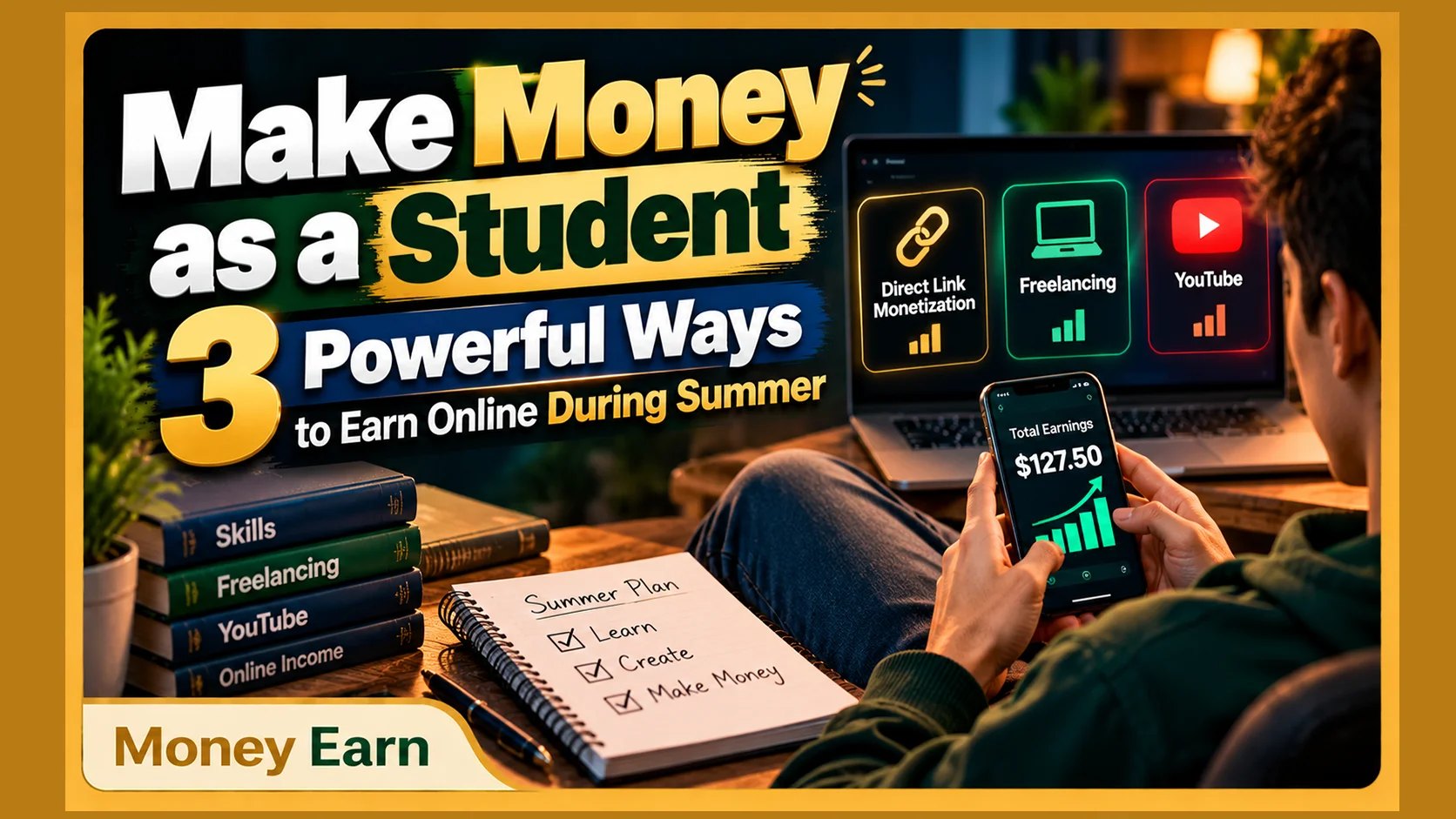
Make Money as a Student: 3 Powerful Ways to Earn Online During Summer
Make Money as a Student during your summer break instead of spending three months scrolling through social media and wondering where the time went.
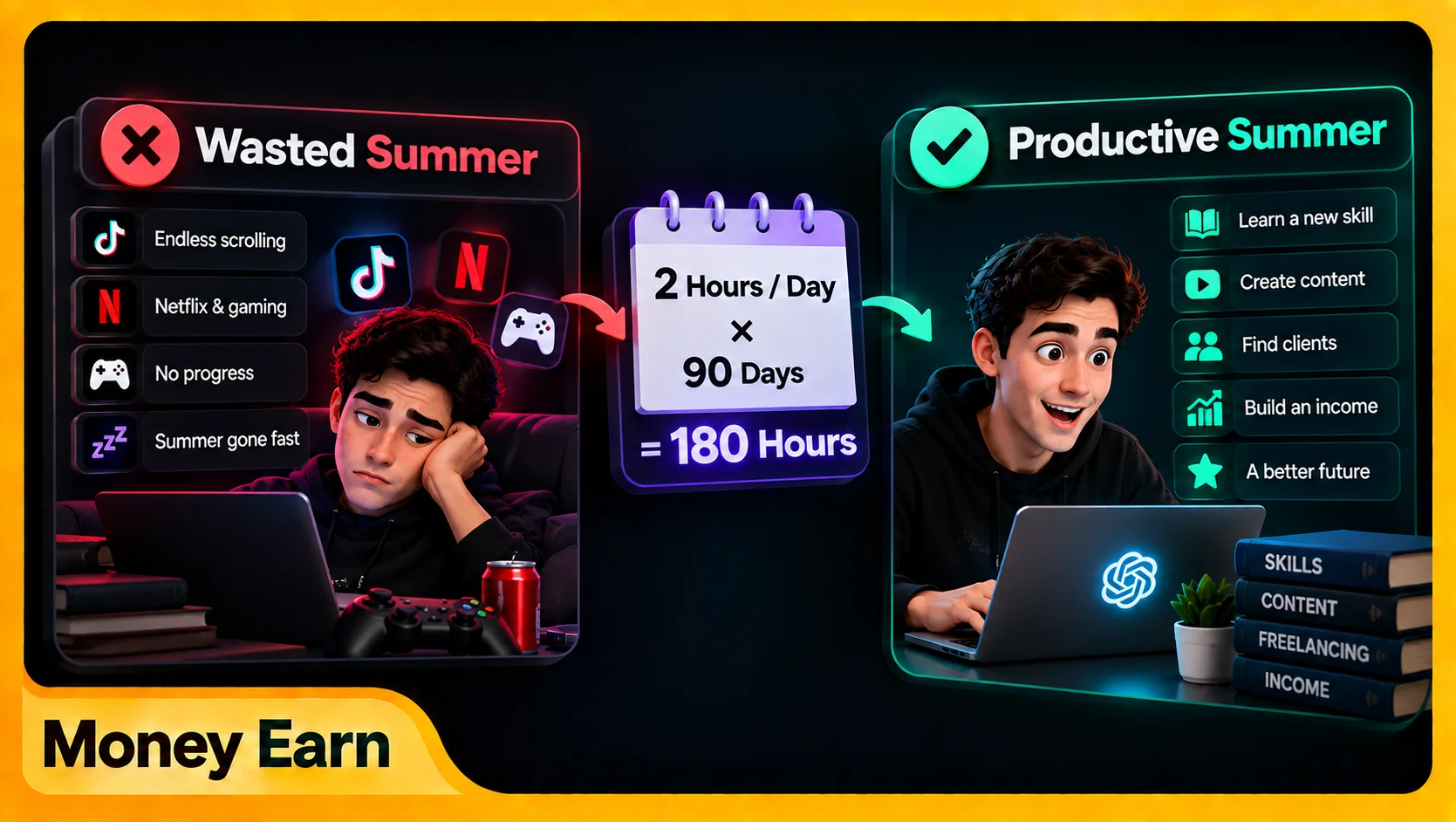
One of the frustrating parts of being a student is needing money for simple things — clothes, going out with friends, upgrading your phone, or buying something you want — while still depending on your parents. Summer gives you something that becomes much harder to find later in life: time. Even two focused hours a day across a 90-day summer gives you around 180 hours to learn, practice, create, and build something useful. Pasted markdown
And we’re not talking about apps that pay pennies for watching ads or completing endless surveys. There are real online models you can start learning with basic equipment, and three of the most practical are Direct Link Monetization, Freelancing, and YouTube.
You don’t need to start all three. Pick one, take it seriously, and use your summer to build something that could continue growing long after classes begin again.
Why Summer Is the Perfect Time to Make Money as a Student
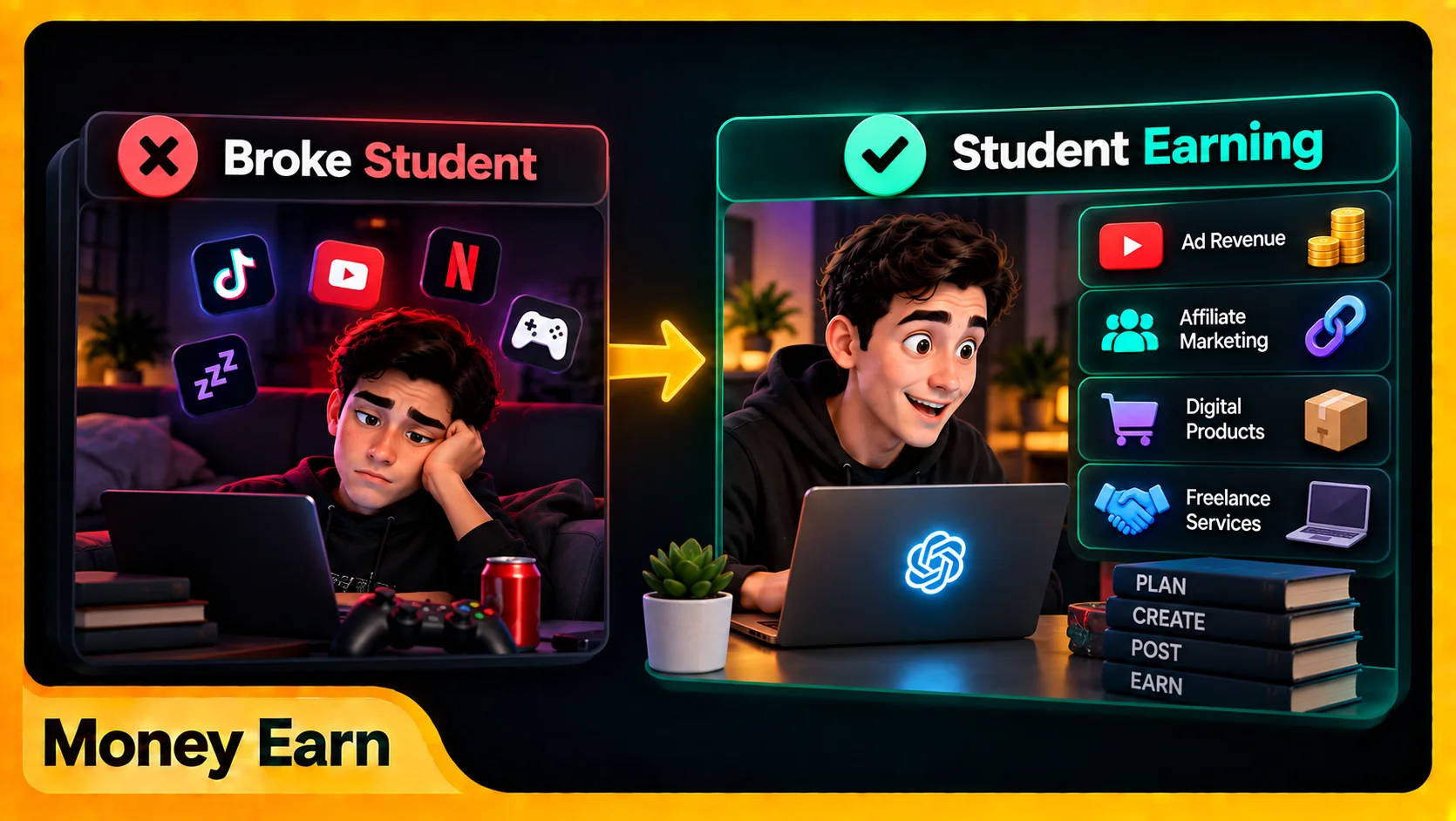
Most students underestimate how valuable a long summer break can be. Two or three months may feel like plenty of time, but a few hours of TikTok here, Netflix there, and gaming every night can make the entire vacation disappear surprisingly quickly.
Now imagine putting only two focused hours a day into one project. Over 90 days, that’s roughly 180 hours spent developing a skill, creating content, finding clients, or learning how online traffic works. You won’t become an expert overnight, but 180 focused hours is enough to make serious progress as a beginner.
The goal isn’t to sacrifice your entire summer. Enjoy your vacation, go out, relax, and spend time with friends. Just protect a small part of each day for something that can leave you in a better position when summer ends.
1. Make Money as a Student With Direct Link Monetization
The first option is Direct Link Monetization, which can be interesting if you don’t yet have a professional skill to sell.
The basic model is relatively simple. Certain advertising networks provide monetized links, and revenue can be generated from eligible traffic depending on factors such as visitor location, traffic quality, advertiser demand, and the network’s own system.
But the important thing to understand is that the link itself isn’t the business — traffic is.
Instead of throwing monetized links everywhere and hoping somebody clicks, think about what people already want. For example, students might search for original study resources, revision guides, educational tools, or useful exam materials. You could create something valuable around that demand, publish content that attracts the right audience, and direct interested visitors to a simple landing page where the traffic is monetized appropriately.
The basic system becomes:
Useful Resource → Free Traffic → Landing Page → Monetization
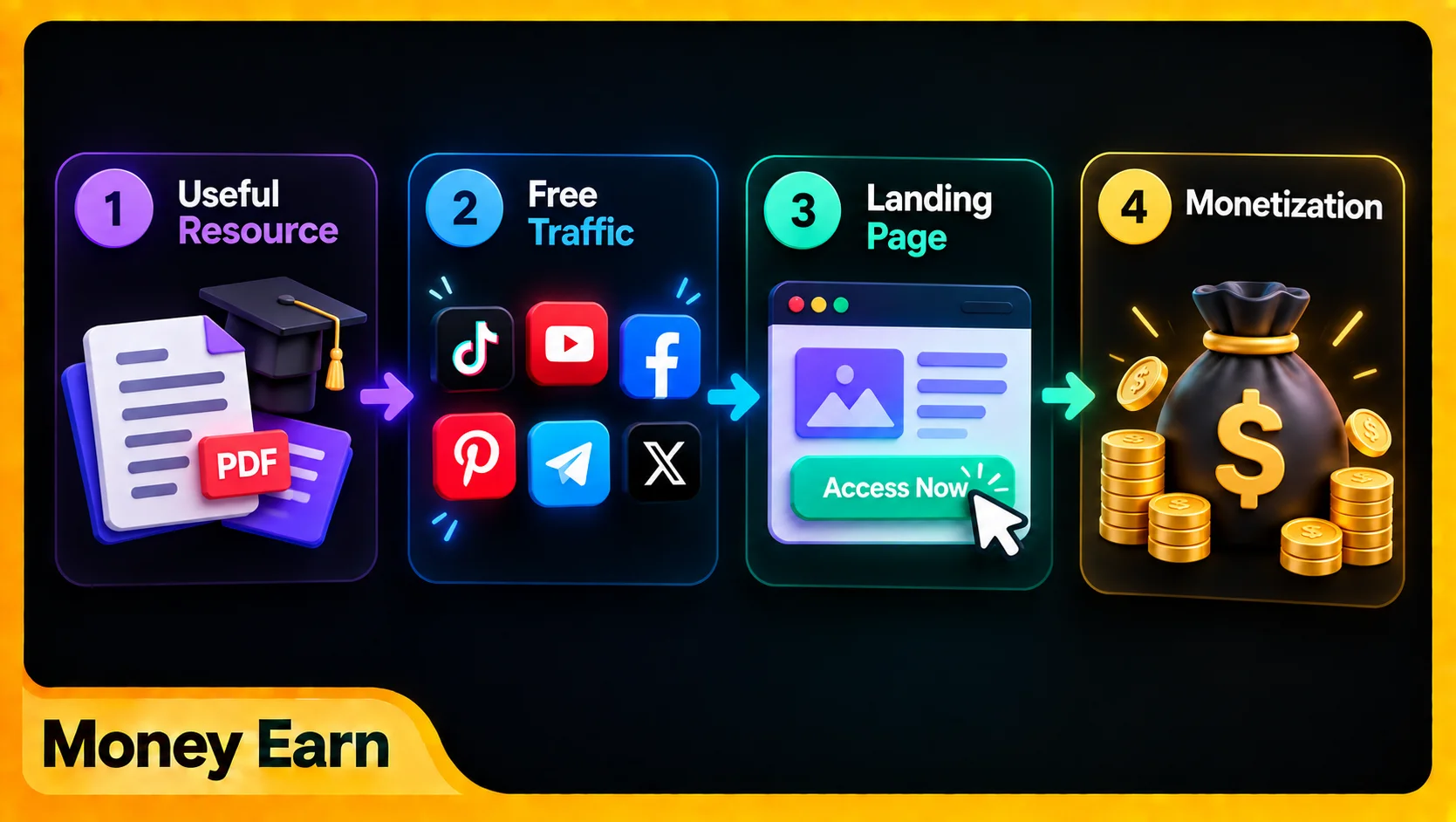
Traffic can potentially come from platforms such as TikTok, Facebook, Pinterest, YouTube Shorts, Telegram, X, or search engines. If you create an exam revision guide, for example, you could publish short content covering common mistakes, important questions, revision techniques, or study tips and then direct interested viewers toward the complete resource.
That’s completely different from randomly spamming a link. You’re creating useful content first, building interest, and turning that interest into traffic.
Direct Link Monetization is particularly important to me because it’s one of the models I used when I was getting started, and I’ve generated more than $2,000 through this type of monetization. Pasted markdown
The bigger lesson, however, wasn’t simply the money. Working with traffic taught me how people click, how landing pages influence behavior, how different audiences respond, and how online monetization works. Those are skills that can later transfer into affiliate marketing, content businesses, websites, and other online projects.
2. Make Money as a Student With Freelancing
If you’re willing to spend part of your summer learning a useful skill, freelancing can be one of the strongest long-term ways to Make Money as a Student.
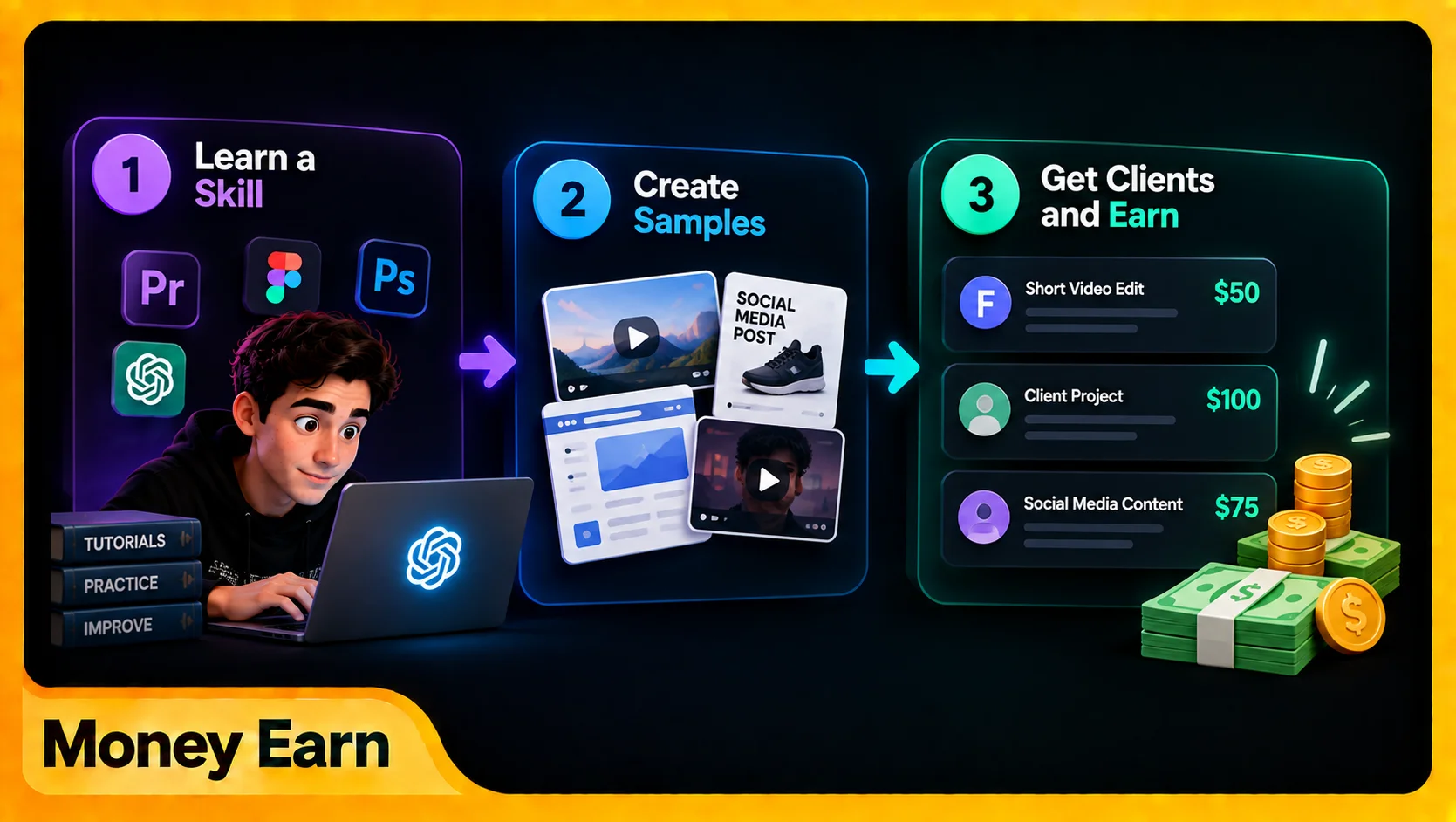
You don’t need years of experience before you can begin. Your first objective is simply to become useful enough to solve a small problem for somebody else. Video editing, graphic design, writing, translation, social media management, presentation design, virtual assistance, basic web design, and content creation are all possible directions.
The mistake is trying to learn all of them at once. Choose one skill and narrow it down even further if possible. Someone learning video editing, for example, doesn’t need to become capable of editing a Hollywood movie before finding a client. A business may simply need a 30-second Reel with clean cuts, captions, B-roll, music, and a strong opening.
Spend several weeks learning and practicing that specific service, then create sample work that demonstrates what you can do.
Build a Portfolio Before You Have Clients
A common beginner problem is thinking, “Nobody will hire me because I don’t have experience.” But you don’t need to wait for a paying customer before building a portfolio.
A designer can create fictional branding projects. An editor can produce sample videos using footage they’re permitted to use. A writer can publish sample articles, while someone interested in social media management can create example content plans.
Your portfolio doesn’t need to prove you’ve worked with 50 companies. It needs to answer the client’s real question: Can this person do what I need?
Once you have several strong examples, start looking for opportunities instead of creating a freelance profile and waiting. Apply for suitable projects, but also publish your work online. Show before-and-after examples, explain your process, share useful tips, and demonstrate the problems your service solves.
Over time, your social presence can become both a portfolio and a marketing channel. Instead of relying entirely on you finding clients, your content can help potential clients discover you.
Your first project may only pay $20 or $50, and that’s fine. That first client gives you something more important than the amount itself: real experience, a completed project, possible feedback, stronger portfolio material, and proof that somebody is willing to pay for your skill.
3. Make Money as a Student With YouTube
YouTube works differently from freelancing because you’re not simply selling your time or completing individual projects. You’re building a digital asset.
A video you publish during summer could potentially continue attracting viewers after you’ve returned to university or school. More importantly, a YouTube channel doesn’t have to rely entirely on advertising. Content can also support affiliate marketing, sponsorships, digital products, freelance services, website traffic, or your own business.
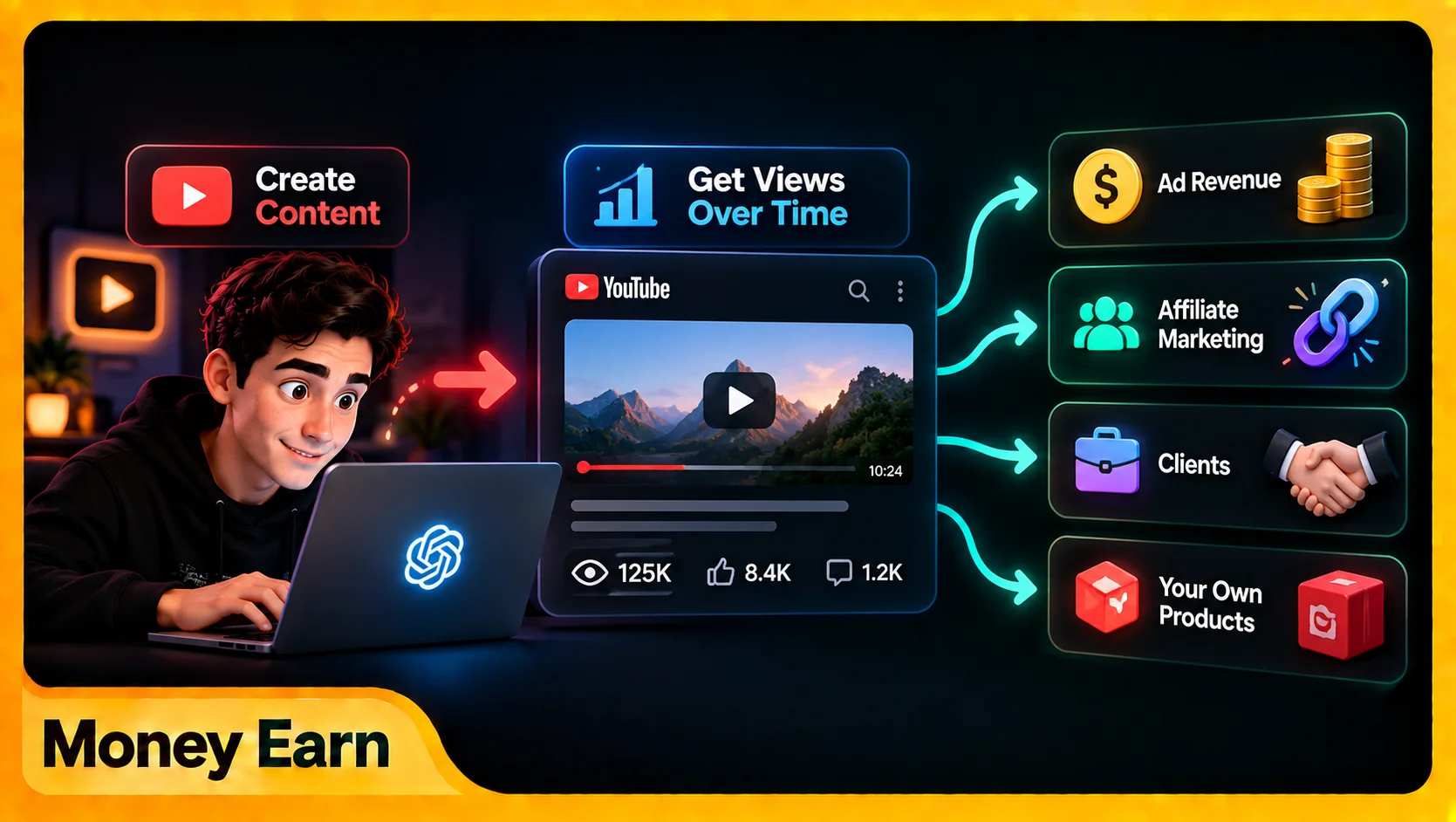
You can even connect YouTube with the skill you’re learning. Suppose you choose video editing as your freelance service. You could create videos about CapCut tricks, editing mistakes, short-form retention, or AI editing tools. Someone may discover your tutorial because they need help, like the quality of your editing, and contact you to create videos for their business.
In that situation, your content has effectively become your salesperson.
Build a Faceless YouTube Channel With AI
You also don’t necessarily need to appear on camera. AI can assist with ideas, research, scripts, narration, visuals, editing workflows, titles, and thumbnails, making faceless content much more accessible to someone working with limited equipment.
A basic workflow could look like this:
Idea → Script → Voice → Visuals → Editing → Publish
Much of that process can even be handled from a phone. But AI shouldn’t become an excuse to mass-produce low-quality videos. Generating a script, adding an artificial voice, placing random footage over it, and uploading 100 videos doesn’t automatically create an audience.
Use AI to work better and faster, not to eliminate human thought. Review your scripts, verify important information, improve your hooks, add original examples, choose visuals that actually support the narration, and edit with a purpose.
AI can be your assistant, but you’re still the creator.
Which Method Should You Choose?
If you’re mainly interested in understanding traffic and online monetization but don’t yet have a strong skill to sell, Direct Link Monetization may be the model you decide to explore.
If you want to develop a practical skill that could eventually turn into a career, agency, or independent business, freelancing gives you a direct path from learning a skill to selling it.
YouTube makes more sense if you’re comfortable with slower progress and want to spend your summer building an audience and digital asset that can potentially support several income streams later.
Whichever route you choose, avoid starting all three simultaneously. If your goal is to Make Money as a Student, getting good enough at one model to produce a real result is more valuable than knowing a little about ten different methods.
A 90-Day Plan to Make Money as a Student
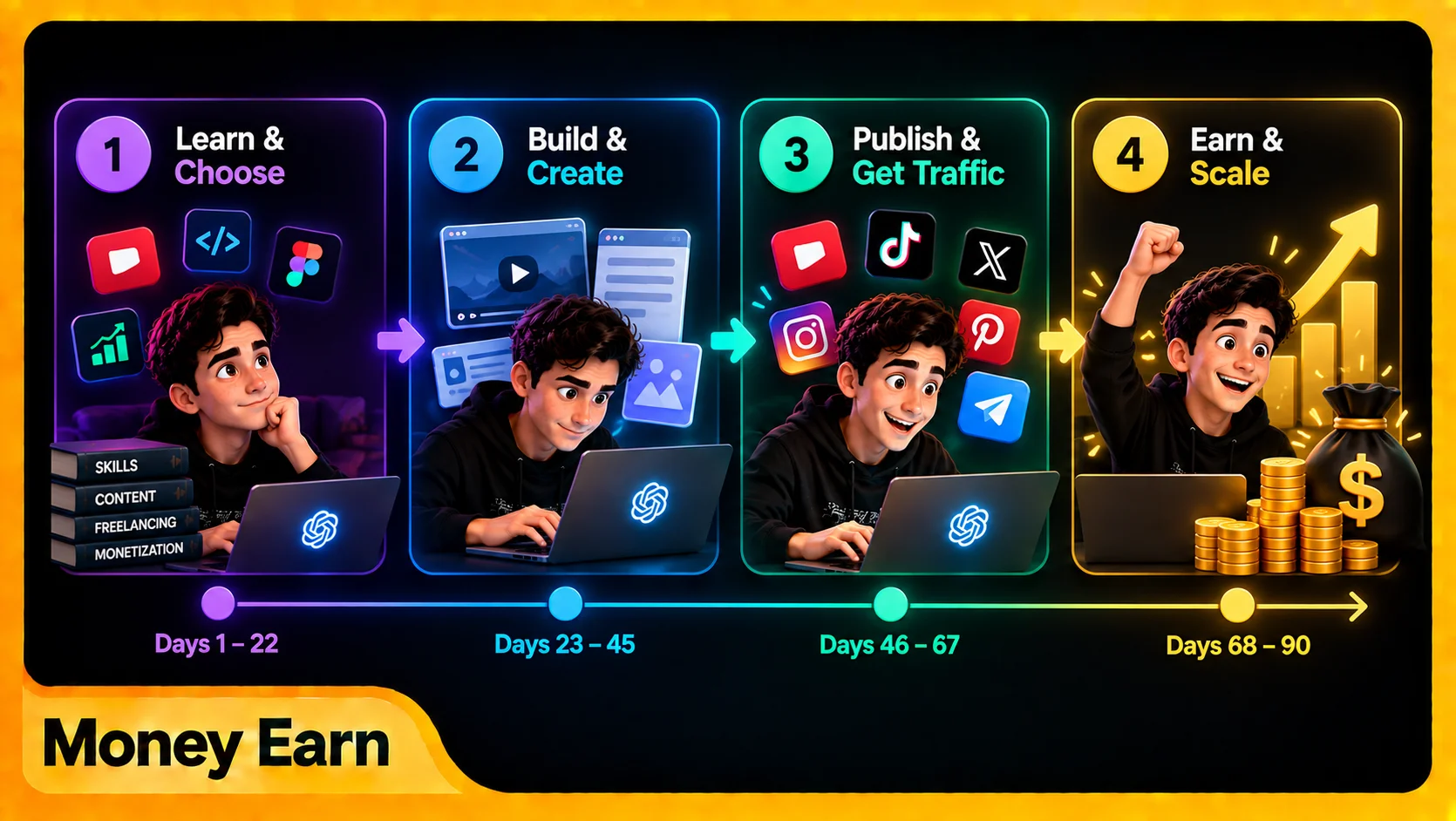
You can divide a three-month summer into three simple phases instead of trying to do everything immediately.
During the first month, focus mainly on learning and building. If you choose freelancing, learn one specific skill and create portfolio pieces. If you choose YouTube, select a niche and begin producing videos. If you choose Direct Links, learn how traffic, landing pages, and your monetization platform work.
During the second month, shift heavily toward execution. Start applying for freelance jobs, publishing videos, creating content, testing traffic sources, and collecting real data. Don’t spend the entire summer preparing to start; at some point, tutorials need to become action.
During the third month, use the results to improve. Look at which videos attracted attention, which proposals received responses, which services generated interest, or which traffic sources produced visitors. Keep what shows potential and change what clearly isn’t working.
By the end of the 90 days, success doesn’t have to mean becoming financially independent. A much better goal is being able to say, “I built something,” instead of, “I watched 87 tutorials.”
3 Rules That Can Save Your Summer
The first rule is focus. Jumping from YouTube to freelancing, then dropshipping, crypto, affiliate marketing, and another new business model every few days is an easy way to spend three months being busy without making meaningful progress. Give one method enough time to produce useful feedback before deciding whether to continue or change direction.
The second rule is to protect a small amount of focused time every day. You don’t need to work through your entire vacation. Two or three distraction-free hours with notifications off can be far more valuable than an occasional ten-hour session followed by a week of doing nothing.
The third rule is to use your first income intelligently. When you make your first $20, $50, or $100, consider reinvesting part of it into whatever removes a real limitation. That might be better internet, a domain, useful software, equipment, or a course you genuinely need.
Reinvesting doesn’t mean buying every subscription you see. If free software already does everything you need, keep using it. Your money should remove bottlenecks, not simply create the appearance of success.
The Real Formula to Make Money as a Student
If you want to Make Money as a Student, the basic formula isn’t complicated:
One Method + Focus + Consistent Work + Time
You don’t need twenty business models or dozens of courses. What matters is choosing something, learning enough to begin, putting what you’ve learned into practice, observing the results, and improving.
Your first attempt may fail. Your first video may get almost no views, your first proposals may receive no replies, and your first traffic campaign may perform badly. That’s part of learning something new.
The important thing is that you’re producing real feedback instead of endlessly preparing.
What Happens After Summer?
This is where the real value becomes obvious.
Imagine one student spends the entire summer consuming content, while another learns video editing and finds two clients. A third publishes 30 YouTube videos, while a fourth learns traffic generation and builds a monetized website.
Summer ends for all of them, but they don’t return to class with the same thing. Some now have a skill, portfolio, clients, audience, experience, digital asset, or even an income stream.
That’s why you shouldn’t obsess over becoming financially independent in 90 days. Use those 90 days to create a foundation that can continue developing afterward.
Something that begins as a simple attempt to earn extra money during summer could eventually develop into freelancing, a content business, affiliate marketing, digital products, or another online business. You don’t need to know exactly where it will lead before you begin.
Final Thoughts: Use the Advantage You Have Now
You might not have much money, expensive equipment, or professional experience yet. But as a student during summer, you may have something many working adults struggle to find: enough free time to learn and experiment.
Use part of it.
Choose Direct Link Monetization, Freelancing, or YouTube and give that path a serious attempt. Don’t expect instant success, but don’t quit after a few days either.
Your goal shouldn’t only be to Make Money as a Student for one summer. A stronger goal is to finish those months with something valuable that you didn’t have when they started — whether that’s a skill, portfolio, audience, client, digital asset, experience, or income stream.
The summer will end either way. What you take with you when it ends is what matters.
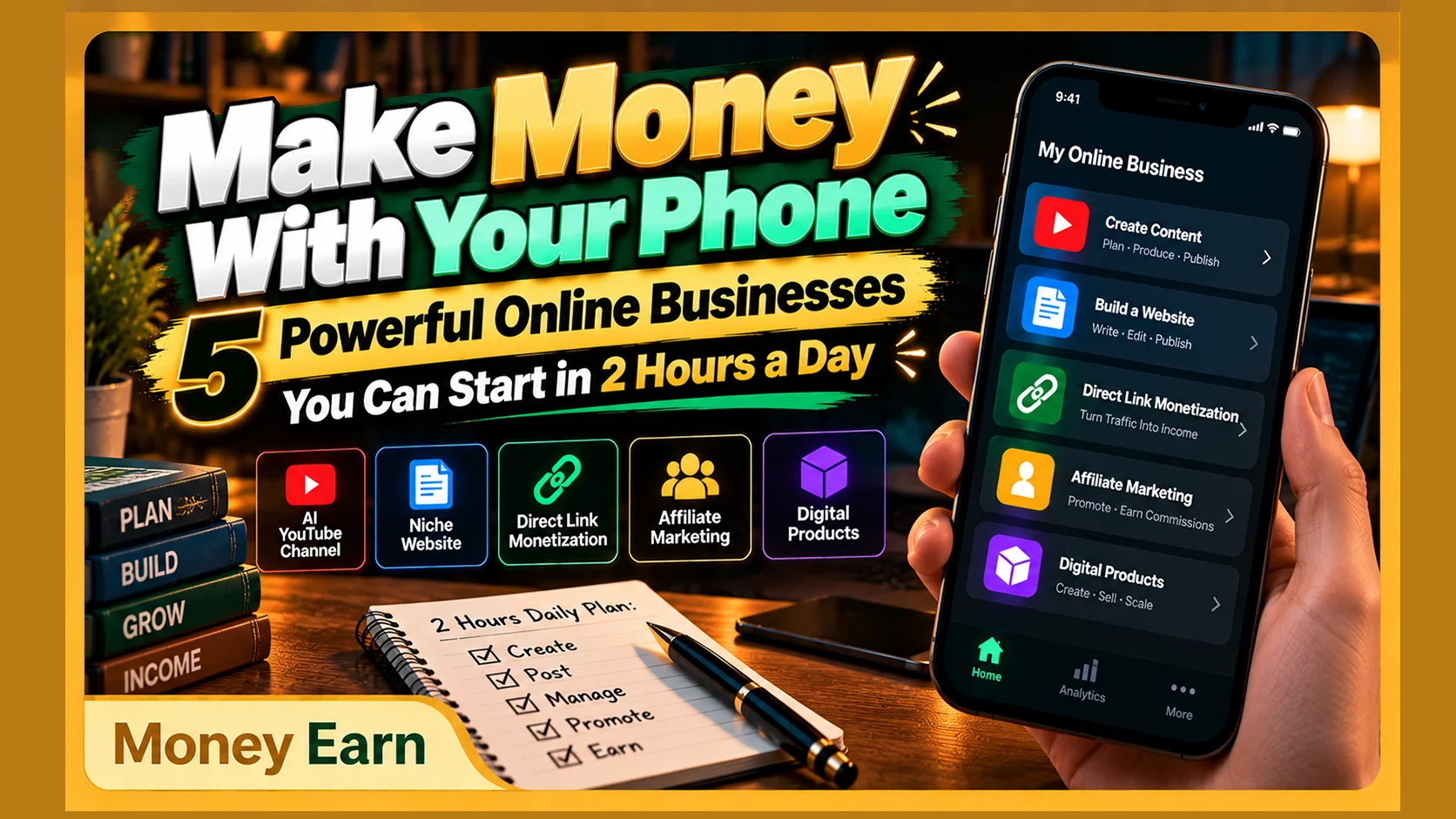
If you want more ideas you can start with minimal equipment, check out our guide to making money with your phone through online businesses you can build in just two hours a day.
Frequently Asked Questions
How Can I Make Money as a Student Online?
You can Make Money as a Student through models such as freelancing, content creation, and traffic monetization. The best starting point is usually choosing one method that matches your interests and available resources, then focusing on it long enough to develop useful skills and get real feedback.
Can I Make Money as a Student Without Experience?
Yes. Beginners can start by learning a practical skill, creating sample work, or understanding a traffic and content model. You don’t need years of experience before beginning, but you do need to develop something useful enough to create value for an audience or client.
What Freelance Skills Can Students Learn?
Possible beginner-friendly skills include video editing, graphic design, writing, translation, social media management, presentation design, virtual assistance, and basic web design. It’s usually better to become competent at one service before adding several others.
Can Students Make Money With YouTube?
Yes. YouTube can support multiple monetization models, including eligible platform advertising, affiliate marketing, sponsorships, products, freelance services, and traffic to other online assets. Building an audience normally takes time, so consistency matters.
How Much Time Should I Spend Working During Summer?
There’s no universal requirement, but even two or three focused hours per day can add up significantly across a long summer break. The goal isn’t to spend your entire vacation working; it’s to consistently protect enough time to make meaningful progress.